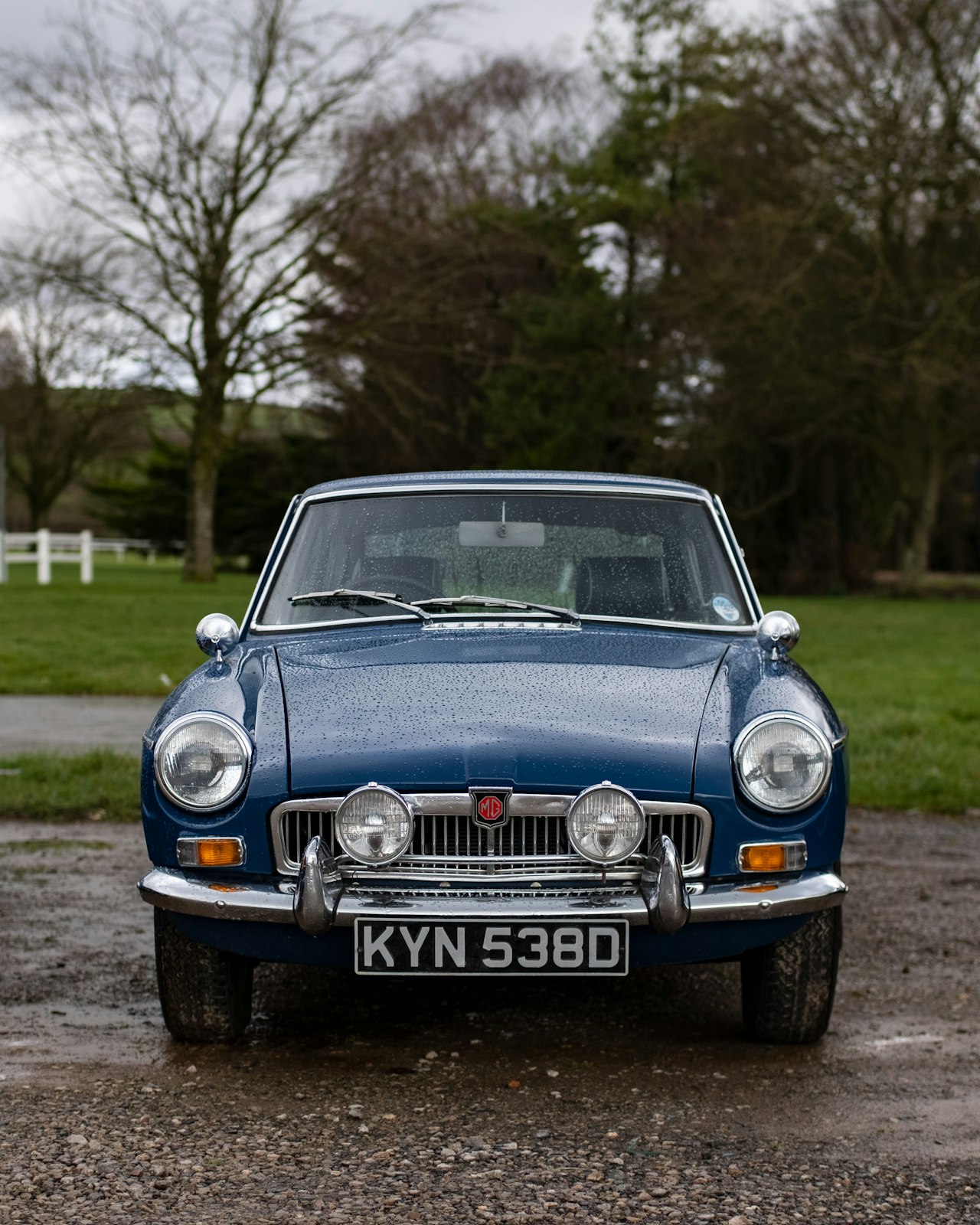
The Marque
“Safety Fast”
MG motto — the oldest in British motoringMG — Morris Garages — started in 1923 as a coachbuilder modifying Morris cars for Cecil Kimber, the general manager of Morris Garages in Oxford. By the 1930s it was producing proper sports cars in its own right, establishing a lineage that ran through the T-series, MGA, MGB, and Midget before the British Leyland years ground the company down and the last Abingdon-built MG rolled off the line in October 1980.
The MG Owners Club, founded in 1973, is today the largest single-marque car club in the world with over 75,000 members. That scale matters for restorers: it means an active community, organised technical days, dedicated registers for every model, and a parts supply chain that has remained commercially viable across four decades. Almost nothing on an MGA, MGB, or Midget is unobtainable.
The cars covered in this guide — MGA, MGB/GT, and Midget — represent the golden age of Abingdon sports cars. Earlier T-series cars are a separate and specialist pursuit. Later MG badges on Metro, Maestro, and Montego platforms are a different matter entirely and not covered here.
Can’t identify the part you need? Describe it in plain English, upload a photo, or paste a part number. CarSpanner identifies MG components from casting marks, part numbers, physical characteristics, and vehicle context — and cross-references against the specialist suppliers most likely to stock it. Find an MG Part →
Model Guide
Three models, four decades, and enough variation to trip up the inattentive buyer. Know your car before you order parts.
The first fully enclosed-body MG sports car. The MGA replaced the T-series in 1955 with a monocoque body of near-perfect proportions. Two engine options: the 1489cc pushrod B-series and the rare 1588cc Twin Cam. Wire wheels were standard on the Twin Cam and optional on pushrod cars; disc brakes were offered later in production. Body panels are available from Moss and Heritage. Twin Cam parts require specialist sourcing.
The definitive MG. The MGB replaced the MGA in 1962 with a stiffer unitary body, a larger 1798cc B-series engine, and improved weather protection. The MGB GT fastback arrived in 1965. Key split: chrome bumper (1962–74) vs rubber bumper (1974–80). Overdrive gearbox was a popular option. Rostyle wheels replaced wires as standard from 1969. Sills, floors, and rear arches are the universal rust problem.
The Midget and Austin-Healey Sprite are badge-engineered siblings — mechanically identical. The Midget began with a 948cc A-series engine and progressed through 1098cc, 1275cc, and finally the 1500cc Triumph Spitfire engine in the last series. Rear leaf-spring suspension throughout. The 1500 models are the most powerful but polarise opinion; the 1275 is generally preferred. Parts for all engines are plentiful; check Sprite listings as well — they share everything.
Parts Landscape by Category
MG parts supply is among the best in the classic British car world. The sheer volume of cars built — over 500,000 MGBs alone — created commercial demand that has sustained specialist suppliers for 40-plus years. Here is what to expect by category.
Body Panels
British Motor Heritage is the gold standard for structural panels, having produced Heritage body shells using original tooling. Panel quality is excellent and fitment accurate. Moss Motors carries a wide range of repair sections alongside Heritage panels. For cosmetic panels where original tooling is not required, reproduction panels from Moss and Rimmer are acceptable for non-structural work. Wire wheel arch repair sections, sill repair panels, floor sections, and rear arch patches are all available. Budget for media blasting any Heritage shell before painting — the steel is untreated mild steel.
Electrical (Lucas Systems)
Lucas electrics earned their “Prince of Darkness” reputation from age and neglect, not fundamental design failure. Most Lucas components were well-engineered for their era. The practical approach: replace the wiring loom (Moss Motors supplies looms to original specification), clean or replace all earth connections, and fit new switches from Moss or LBCarCo. Many Lucas items — fuses, relays, flasher units, switches — are still in production or stocked as NOS by specialist suppliers. Alternator conversions (replacing the original dynamo) are a popular reliability upgrade; Moss sells kits specific to the MGB and Midget.
Engine — B-Series (MGB & late MGA)
The 1798cc B-series in the MGB is one of the longest-lived production engines in history, built from 1954 to 1980 in various forms. Rebuild support is comprehensive: pistons, liners, bearings, camshafts, timing chains, and gaskets are all available from Moss Motors, Rimmer Bros, and Victoria British. The engine is straightforward to rebuild with good machine shop support and the Haynes or factory workshop manual. SU carburettors (HS4 on most MGBs) respond well to a proper rebuild kit — do not replace them with alternatives unless you have a specific reason.
Engine — A-Series (Midget)
The 948cc, 1098cc, and 1275cc A-series engines powering the Midget share the same basic architecture and are extremely well supported. The 1275cc Cooper S specification is the most desirable engine for Midget owners wanting performance. Moss Motors and Rimmer Bros stock full rebuild kits. The 1500cc Triumph engine in the final Midgets is a different unit from the same era — parts come from Triumph Spitfire sources as well as Midget specialists.
Suspension & Brakes
MGB front suspension uses coil springs with wishbones; the Midget uses a coil spring and wishbone arrangement at the front with leaf springs at the rear. All rubber bushes degrade on unrestored cars — budget for a full suspension bush kit as a matter of course. Brake components (pads, shoes, cylinders, master cylinders, calipers) are well supported by Moss, Rimmer, and general classic car brake specialists. The MGB’s servo-assisted brakes from 1974 require careful matching of master cylinder and servo specification.
Supplier Comparison
These are the suppliers that MG owners reference consistently. Moss Motors is the natural first stop for most parts; the others have specific strengths worth knowing.
| Supplier | Location | Strengths | Best For |
|---|---|---|---|
| Moss Motors Primary | Goleta, CA (US) & UK | Largest MG/British sports car parts catalogue in North America. Comprehensive stock, excellent catalogue notes. | First stop for any MGA, MGB, or Midget part. Wiring looms, engine rebuild kits, Heritage panels, trim, and mechanical components all in one place. |
| Rimmer Bros | Lincoln, UK | Strong on mechanical and electrical components for British classics. Competitive pricing. Fast UK and European shipping. | UK/European buyers. Cross-reference with Moss for pricing on engine, gearbox, and electrical parts. Very strong on B-series engine components. |
| British Motor Heritage | Witney, UK | Manufactures Heritage body shells and panels from original tooling. The reference standard for structural bodywork. | Full body shells, major structural panels, sill sections, floor panels. Any body panel where accuracy and gauge are critical to the restoration result. |
| Moss Europe | Bradford, UK | European arm of the Moss group. Strong stock, fast EU shipping, UK-based customer service with MG specialist knowledge. | European buyers seeking Moss-quality parts with shorter shipping times and EU-friendly pricing. |
| Victoria British | Lenexa, KS (US) | Broad British car catalogue covering MG, Triumph, Austin-Healey. Good alternative source for parts Moss is out of stock on. | US buyers seeking a second source. Useful for Midget A-series and 1500cc parts, and for Sprite/Midget overlap components. |
| LBCarCo | UK | Specialist in Lucas electrical components and British classic car electrics. Deep stock of switches, relays, and wiring components. | Lucas electrical components. Dashboard switches, flasher units, wiper motors, and lighting components. Rewiring projects where you need original-specification items. |
For any MG part you are uncertain about — especially when year and specification matter — ask CarSpanner. Describe the car, the component, and whether you have the chrome or rubber bumper spec, and we will identify the correct part and the best current source.
Common Restoration Challenges
MG restorations follow predictable paths. These are the challenges every MG restorer encounters.
British Leyland Quality Variation
MG was absorbed into British Leyland in 1968, and the quality of materials and production control varied significantly across the BL years. Cars built in the early 1970s can show inconsistent panel gaps, variable paint preparation, and wiring that was less carefully assembled than Abingdon’s pre-BL work. When buying a BL-era MGB or Midget, budget more generously for hidden rectification work. This is not universal — many BL-era cars are excellent — but it is more common than on pre-1968 cars.
Lucas Electrics: The Prince of Darkness
The reputation is overstated but not entirely wrong. Lucas electrical systems on MGBs and Midgets that have not been properly maintained will be unreliable. The root causes are: degraded wiring insulation causing intermittent shorts, corroded earth connections producing strange fault symptoms, and failed components that have never been replaced. The solution is systematic: replace the wiring loom with a Moss Motors loom, clean all earth points back to bare metal, and replace known weak components (flasher units, ignition switches, voltage regulators) preventatively. An MGB with a new loom and clean earths is not an unreliable car.
Body Rust Patterns
MGB and Midget body corrosion follows well-documented patterns. The sills are structural and always the priority — they rot from the inside out via moisture trapped in the box section. The floor panels rust from wet carpets and poor drainage. The rear arches collect mud and debris behind the inner arch, which holds moisture against the metal. The battery tray and surrounding area suffers from acid damage. The heelboard and the area around the hood-rail seal on convertibles are frequently overlooked. On any unrestored car, budget for all of these areas. A Heritage body shell is the correct solution when multiple areas are compromised simultaneously.
SU Carburettor Rebuilding
The HS4 SU carburettors fitted to the MGB and the HS2s fitted to the Midget are simple, reliable, and responsive to a proper rebuild. The common problems are: a worn jet causing a rich mixture and black smoke, a sticky piston causing flat spots and hesitation, worn needle-to-jet clearance causing fuel consumption issues, and hardened float chamber gaskets causing leaks. Moss Motors sells model-specific rebuild kits. The SU is easier to rebuild than most carburettors and tolerant of a careful amateur rebuild. Set the mixture correctly using the lifting-pin method after reassembly. Do not attempt to replace SUs with Webers or other alternatives unless you have a specific performance goal — a rebuilt SU will serve the standard engine better.
Three specific MG parts have dedicated sourcing guides covering where to find them and what to do when they're out of stock:
- MGA Coupe Rear Window Rubber Seal → — Out of stock everywhere; what to do about it.
- MGB Grey Door Drop-Glass Brush Seals → — Black is everywhere; grey is not. Where to find the right colour.
- MG/Triumph Interior Components Guide → — Dash refurbishment, vinyl seats, TF door cards, headliners, wood-rim wheels.