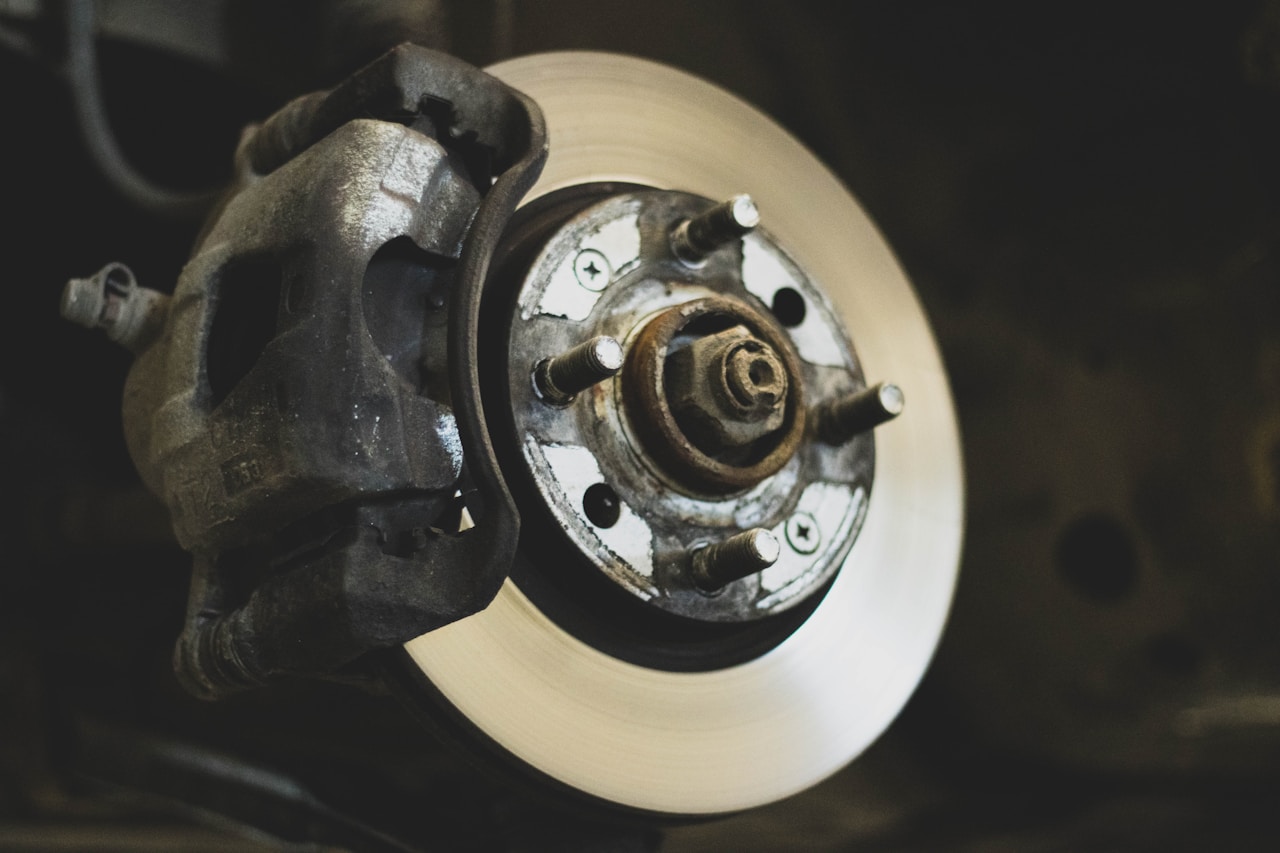
Hydraulic Components
The hydraulic system — master cylinder, wheel cylinders, slave cylinders, calipers — is the most consequential part of a classic brake restoration. These components operate under significant pressure and thermal stress, and seal degradation is not always visible from the outside.
A master cylinder with a bypassing piston seal produces a sinking pedal under sustained pressure — the classic sign of internal leakage. This can appear suddenly in a car that tested fine on a short drive. Full replacement or professional rebuild with a quality seal kit is the only remedy.
Wheel cylinders on drum brake systems should be replaced or rebuilt as a set per axle. A weeping wheel cylinder contaminates brake shoes and dramatically reduces friction. The cost of rebuilding one is negligible; the cost of overhaul after contamination is not.
For calipers, inspect the bore condition before fitting a seal kit. Pitting in the bore causes rapid seal failure regardless of seal quality. If the bore shows corrosion beyond light surface oxidation, sleeve or replace the caliper.
Friction Materials — Pads & Shoes
Brake pad and shoe quality is measured by consistency of friction coefficient across temperature ranges, not by hardness or longevity alone. A cheap pad with variable friction is dangerous — it stops predictably when cold and unpredictably when hot.
For road-driven classics, look for pads and shoes from suppliers who publish friction ratings (typically expressed as a coefficient between 0.35 and 0.55). EBC Greenstuff and Mintex are two suppliers with long track records for classic applications. Avoid unbranded pads from generalist catalogue suppliers.
Asbestos-based friction material is still occasionally encountered in very early NOS brake shoes. Do not fit these. Dispose of them properly and use modern non-asbestos equivalents.
Pipes & Hoses
Brake pipes (hard lines) corrode from the outside in, and from inside where moisture accumulates at low points. On a classic car of 30–60 years old, unless the pipes are known to have been replaced recently, assume they need replacement. A burst brake pipe at speed is not a recoverable situation.
Copper-nickel (Cunifer) is the preferred modern replacement material — it is corrosion-resistant, easy to bend, and compatible with all standard brake fluids. Do not use pure copper pipe; it work-hardens and fatigues over time. Steel pipe is OEM-correct but requires proper protective coating.
Rubber brake hoses degrade internally without any external sign of failure. The rubber swells and forms a partial blockage — fluid flows in under pedal pressure but returns slowly, causing the brakes to drag and overheat. Replace all rubber brake hoses on any restoration regardless of appearance if age is unknown.
Drums & Discs
Cast iron drums and discs corrode on the swept surface when the vehicle sits unused. Light surface rust is removed by normal use and does not require replacement. However, deeply pitted or grooved surfaces reduce friction contact area and should be skimmed (if within specification) or replaced.
Minimum thickness specifications are cast into the disc or printed on the drum. Do not skim below minimum — the reduced mass cannot absorb heat adequately and warping is likely. Replacement discs for most classic cars are available from Moss Motors, Rimmer Bros, and SNG Barratt at reasonable prices.
Finned aluminium brake drums — fitted to some Jaguar and American muscle cars — require specific friction materials and careful attention to expansion coefficients. Consult the workshop manual before fitting standard modern shoes.
Quality Tiers
Common Pitfalls
- Mixing fluid types: Glycol-based (DOT 3/4/5.1) and silicone-based (DOT 5) fluids are incompatible. Mixing them causes seal swelling and hydraulic failure. Know what is in the system before topping up.
- Forgetting the rear brakes: Disc/drum combinations often have rear drums that are overlooked during a "brake upgrade." A rear brake that doesn't work correctly defeats ABS (if fitted) and destabilises emergency stops.
- Incorrect pad bedding: New pads need a bedding-in procedure to transfer a thin layer of friction material to the disc. Skipping this and immediately applying heavy braking glazes the disc and reduces stopping power dramatically.
- Seized handbrake mechanisms: Classic car handbrake cables and rear mechanisms corrode and seize readily. A seized cable that holds pressure can cause constant rear brake drag — uneven rear tyre wear and overheating are the symptoms.
- Wrong bore master cylinder: A replacement master cylinder with a slightly different bore diameter changes the pedal feel and hydraulic ratio. Always match the bore to the OEM specification or rebuild the original.
Recommended Suppliers
| Supplier | Speciality | Notes |
|---|---|---|
| Moss Motors | British sports cars | Full brake rebuild kits for MG, Triumph, Austin-Healey. Discs, drums, shoes, master cylinders. Generally reliable own-brand sourcing. |
| SNG Barratt | Jaguar | Excellent Jaguar brake inventory. E-Type, XJ, S-Type hydraulics. Inboard rear disc kits for E-Type. Technical knowledge available. |
| Rimmer Bros | Triumph, Rover | Strong TR6, TR7, Rover SD1 brake stock. Caliper rebuild kits. Good pricing on consumables. |
| Apple Hydraulics | Hydraulic rebuild specialists | US-based brake and clutch hydraulic rebuilding service. Send in your original components; receive rebuilt units with warranty. For master cylinders and calipers where originals must be retained. |
| eBay Motors | NOS and used | NOS brake components occasionally available. Only buy from verified sellers with clear provenance. Do not buy used hydraulic components from unknown sources. |
Related Guides
- Safety Components: Why Quality Matters — CarSpanner's in-depth guide on safety-critical parts sourcing, including a dedicated section on brake system components and why pattern parts are not acceptable.
- Jaguar E-Type Marque Guide — The E-Type's brake system evolved significantly across Series 1, 2, and 3. Our marque guide covers the inboard rear disc brake setup and what suppliers stock the correct parts.
- Ford Mustang Marque Guide — Mustang brake upgrades from drum to disc, and the parts and supplier landscape for US muscle classics.
- Porsche 911 Marque Guide — The 911's Fuchs alloy wheels double as brake cooling rotors — sourcing, restoration, and the brake system components covered.
- Datsun 240Z Marque Guide — The 240Z's unibody structure makes chassis alignment critical after brake work. Our marque guide covers the full context.
- Chevrolet Corvette Marque Guide — C2 and C3 Corvettes used a fully independent suspension with transverse leaf springs front and rear — brake system components and the supplier landscape for US sports cars covered.