Hoods & Soft Tops
The hood is the single most visible trim item on a convertible classic and the one that causes the most sourcing difficulty. Hood frames, tension rods, and hood material specifications changed during production runs on most British sports cars — sometimes multiple times. A hood cut for a late model fitted to an early car will gap at the rear quarters, billow at speed, or fail to seal the roof rails correctly.
Always identify the specific production date range your car falls within before sourcing a hood. For MGB roadsters, for example, there are several distinct hood configurations across the production run — chrome-bumper early, rubber-bumper late, and variations in between with different frame geometry.
Hood material should be specified to match the original — typically mohair (wool and cotton blend, used on most British sports cars from the 1950s–70s) or vinyl (used on more budget-oriented models and American market cars). Mohair has a distinct texture and appearance that synthetic alternatives do not replicate convincingly at close inspection.
Carpets & Floor Coverings
Classic British sports car carpets were wool-mix cut pile — either Wilton or West of England specification. The pile depth, colour fastness, and texture of cheap synthetic reproductions differ noticeably under close inspection and under foot.
For a concours car, wool-mix carpet from a specialist supplier is essential. For a driver, good-quality nylon loop-pile carpet is more practical — it cleans more easily, wears better in footwell areas, and the difference is not visible in use. The key is getting the colour right: carpet colours vary significantly between model years and trim specifications.
Many classic cars had rubber floor coverings in the footwells beneath carpet — either a ribbed mat or a moulded rubber section. These are often missing or replaced incorrectly. Correct rubber floor coverings are available from Moss Motors and Rimmer Bros for most British applications.
Seat Covers & Upholstery
Original British sports car seats used PVC (marketed as "Rexine" or "Ambla") or leather for the outer faces, with perforated PVC or leather inserts on some models. Cloth inserts were used on some higher-specification interiors.
Generic seat cover kits — designed to stretch over multiple seat shapes — produce a wrinkled, poorly fitting result on most classic seats. Bespoke seat covers cut and sewn for your specific seat shape are the correct approach. Prestige Auto Trim and Classic Revival (UK) produce model-specific trim kits for most British classics.
Seat foam degrades over decades, becoming compressed and split. Replacement seat foam cut to the original profile significantly improves the look and comfort of re-trimmed seats. Firms specialising in classic car upholstery often produce replacement foam profiles; alternatively, general foam suppliers can cut to templates.
Door Cards & Panels
Door cards are among the most commonly damaged interior components — they absorb moisture from failed door seals, swell, and delaminate. Correct door cards use a hardboard or Sundeala backing board (not modern MDF, which is too heavy and reacts differently to moisture) with the correct covering material applied.
For most British classics, reproduction door cards are available from the main suppliers. Quality varies. The key areas to check are the material specification (vinyl grain and colour match), the fit of the apertures for window winders and door pulls, and the quality of the material adhesion to the backing board.
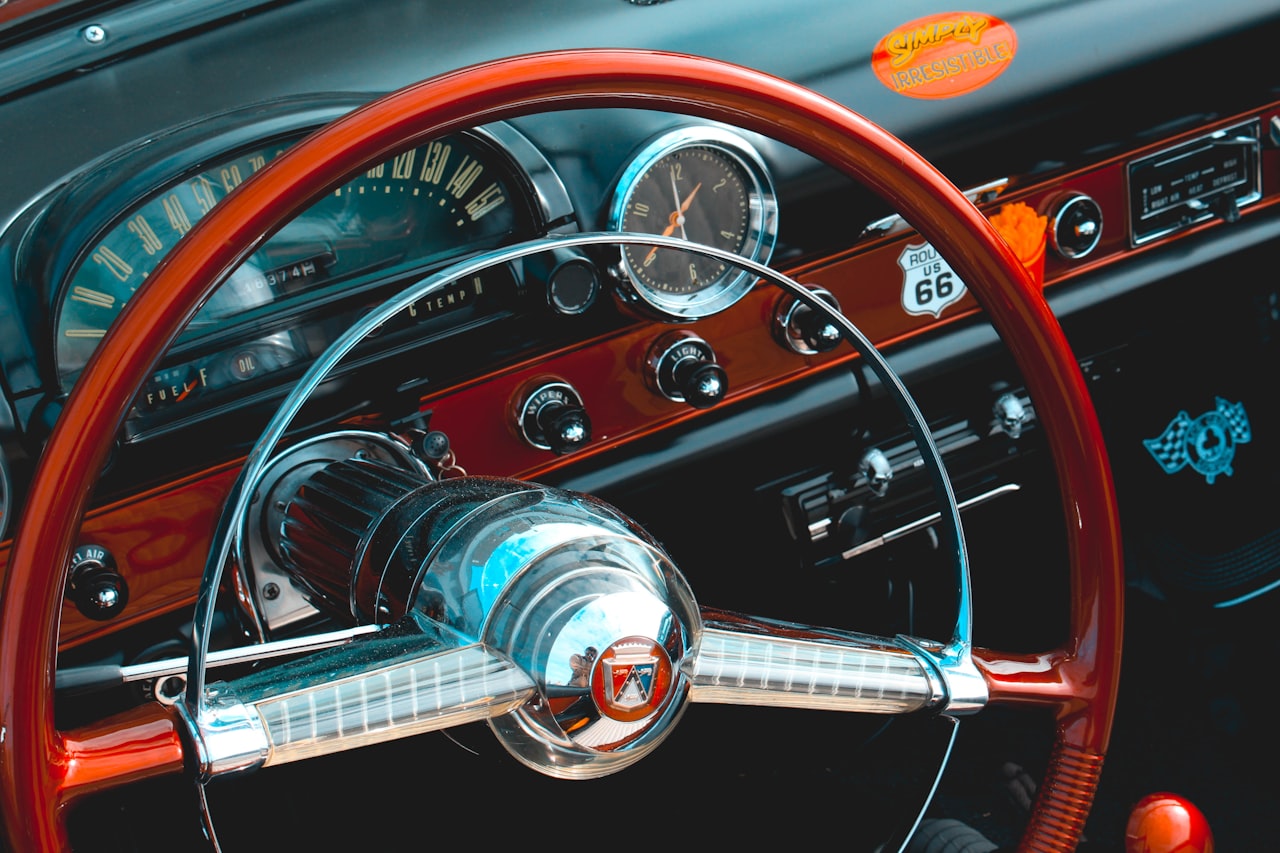
Dashboard & Fascia
Padded dashboards used in British cars from the 1960s–70s were typically covered in a vinyl-foam composite that cracks with age and UV exposure. The cracking is progressive and begins at the corners and edges.
Surface cracks in vinyl can be repaired professionally using specialist compounds, but the repair is less durable than an original surface under temperature cycling. For a concours restoration, a professional re-trim of the original backing is the best outcome. For a driver, a correctly-coloured replacement dashboard from a specialist is practical.
Wood dashboard veneers — used on Jaguar, Morgan, and some Triumph models — should be professionally refinished rather than replaced where possible. Replacement veneers are available but matching the grain and tone of adjacent period wood is difficult without specialist materials and skills.
Cross-Model Trim Compatibility
Many British manufacturer families shared trim components across models — a cost-saving measure that has since become a useful sourcing tool. Certain trim pieces fitted to an obscure model can be sourced as the same part from a more common one at lower cost and better availability.
The cross-model trim guide on CarSpanner covers documented compatibility across the major British manufacturer families. This is particularly useful for sourcing interior fittings for lower-volume variants where dedicated reproduction supply is limited.
Recommended Suppliers
| Supplier | Speciality | Notes |
|---|---|---|
| Moss Motors | MG, Triumph, Austin-Healey | Extensive interior trim including carpet sets, hood kits, seat cover sets, and door cards. Hood material options include mohair and vinyl. Good technical notes on model-year fitment. |
| SNG Barratt | Jaguar | Jaguar interior trim including leather seat covers, wood veneer dash kits, and carpet sets. E-Type hood kits and frame components. |
| Prestige Auto Trim | British classic upholstery | UK-based bespoke trim specialists. Model-specific seat covers, door cards, and hood kits for most British classics. Better quality specification than generic kits. |
| Rimmer Bros | Triumph, Rover | Strong Triumph trim catalogue. TR6, Spitfire, and TR7 interior components. Carpet and seat cover sets in correct colour specifications. |
| eBay Motors | Used original trim | Used original trim in good condition is often preferable to reproduction for uncommon items. Particularly useful for dashboard components, wood veneers, and hard plastic trim pieces. |
Related Guides
Cross-Model Trim Parts
Documented trim compatibility across British manufacturer families — source rare parts as common ones.
→MGB Grey Door Brush Seals
The specific sourcing challenge for MGB door frame brush seals and what alternatives exist.
→MGA Coupe Rear Window Seal
Where to find the MGA Coupe rear window rubber — a hard-to-source item with limited supplier availability.
→Jaguar E-Type Marque Guide
E-Type interior trim: the leather specifications across Series 1, 2, and 3, wood veneer kits, and the correct carpet colour codes from the heritage certificate.
→Mercedes W123 Marque Guide
The W123's MB-Tex and leather interior specifications, dashboard restoration, and the correct colour codes for each trim combination.
→Related Guides
- Safety Components: Why Quality Matters — Brake, steering and electrical — the safety-critical systems. Electrical system faults can affect interior lighting and instruments; good-quality wiring matters for road safety.
- OEM vs NOS vs Reproduction — When to source NOS or OEM interior trim versus modern reproduction — includes material quality and colour matching guidance.
- Jaguar E-Type Marque Guide — E-Type interior trim across Series 1, 2, and 3: leather vs vinyl specifications, wood veneer kits, and correct carpet colour codes from the heritage certificate.
- Ford Mustang Marque Guide — Mustang fastback and coupe interior: seat covering materials, dashboard pad restoration, and correct Deluxe vs Standard trim specifications.