Classic Car Parts Guide

OEM vs NOS vs Reproduction vs Reconditioned: What Classic Car Restorers Need to Know

Visit any classic car forum and you'll find threads that run for years on a single topic: whether a particular NOS part justifies the price over a quality reproduction, or whether an "OEM" listing really means what the seller claims. The terminology matters — not just for concours judging, but for safety. This guide settles the definitions across all four categories — OEM, NOS, quality reproduction, and the often-overlooked fourth, reconditioned.

Geoff's Verdict

OEM means original manufacture; NOS means original and unused; quality reproduction is the practical choice for most builds; reconditioned (an OEM core professionally rebuilt) is the right answer on tight-tolerance mechanical assemblies where dimensional accuracy matters but the build is not concours. For safety-critical components — brakes, steering, suspension — only OEM, NOS, or quality reproduction from a known specialist. Never pattern parts.

Affiliate disclosure: CarSpanner may earn a commission when you buy through supplier links on this page. This does not affect our editorial recommendations — we list suppliers based on their usefulness, not commission. Full disclosure →
Verify before you buyPart numbers, fitment guidance, and supplier recommendations in this guide are for educational reference. Always confirm compatibility and specification with your chosen supplier before ordering. CarSpanner does not recommend pattern parts for any safety-critical component — brakes, steering, suspension, or fuel systems.

OEM — Original Equipment Manufacturer

OEM refers to parts made by or directly sourced by the vehicle's original manufacturer. When your 1967 MG Midget left the Abingdon factory, every bolt, seal, and trim piece was either produced by BMC or supplied by a contracted component manufacturer to BMC's exact specification. Those are OEM parts. See the MG marque guide for E-Type and MGB sourcing details.

The challenge for classic car restorers is straightforward: most OEM parts for vehicles built forty, fifty, or sixty years ago are no longer in production. BMC is gone. Lucas has changed beyond recognition. Girling was absorbed into TRW. The original part numbers survive in parts books and microfiche archives, but the parts themselves stopped rolling off assembly lines decades ago.

What remains is the secondary market: New Old Stock (NOS), high-quality reproductions made to the original specification, or reconditioned original components.

The loose use of "OEM" by sellers

Online marketplaces have blurred the term considerably. You will see "OEM," "OEM quality," and "OEM spec" used interchangeably by sellers to describe parts that have never been near an original manufacturer. When a listing says "OEM quality," it usually means reproduction — the seller is claiming (not proving) that their part matches the original specification. It carries no guarantee and no certification.

When you need to know the truth, ask directly: is this an original part from original production, or a modern reproduction? For concours judging and numbers-matching restorations, the answer changes everything.

Not sure whether what you're looking at is genuine OEM or a reproduction being sold as one? Describe it to Geoff.

Ask Geoff →
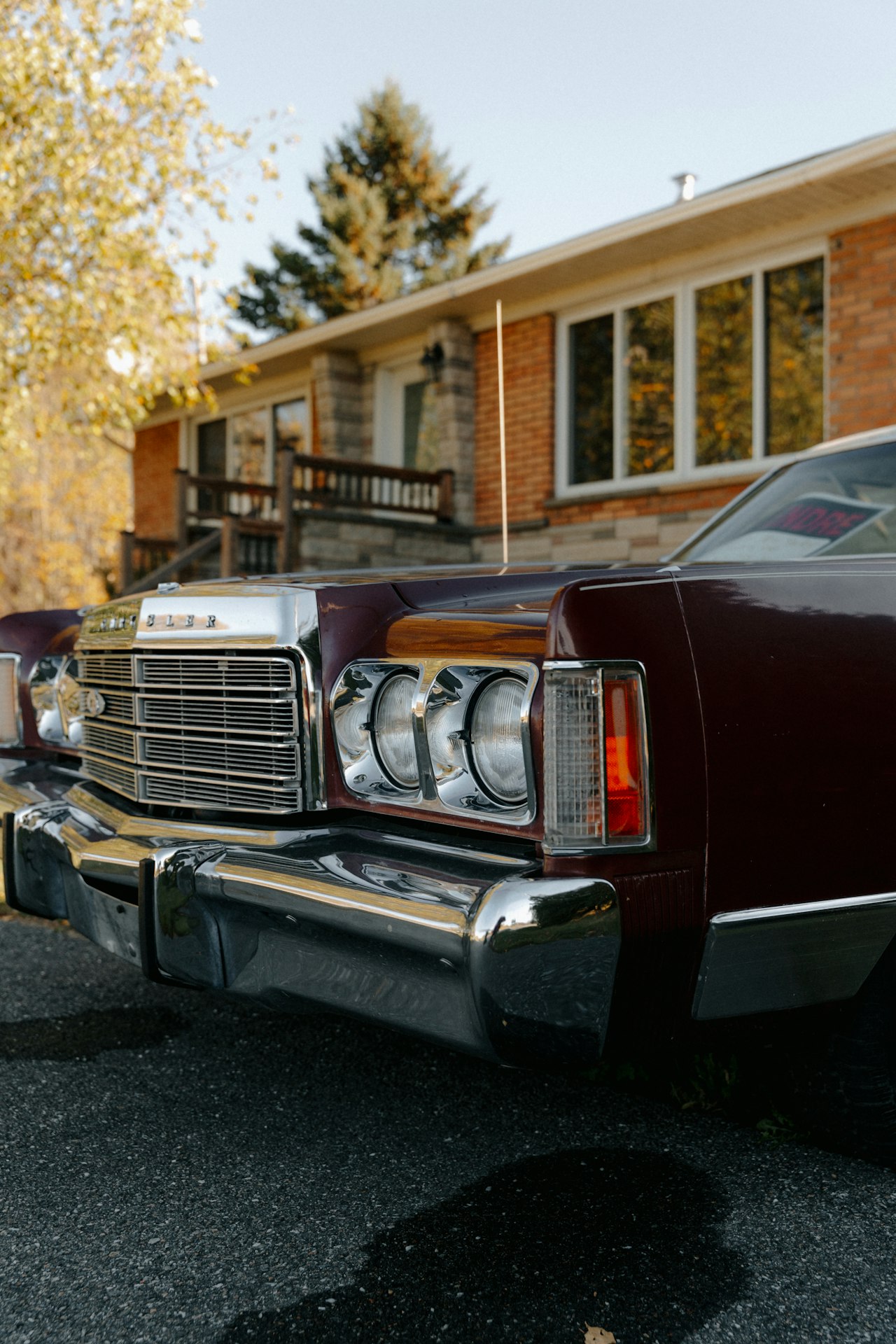
Rare new old stock parts displayed on a workshop bench
Understanding the differences between OEM, NOS, reproduction, and reconditioned parts is fundamental to making smart purchasing decisions. Courtesy Unsplash.

NOS — New Old Stock

New Old Stock is exactly what the name suggests: original parts, manufactured during the vehicle's production run, that were never sold or fitted. They have sat in a warehouse, a parts dealer's stockroom, or a service centre's inventory — unopened, in original packaging, sometimes with the original price ticket still attached.

NOS is the holy grail for concours restorers. If a JCNA or similar club judge is comparing two 1969 Corvettes, the one with genuine NOS trim clips still in period-correct boxes will score higher than the one fitted with modern reproduction clips — regardless of how good the reproductions look. For a numbers-matching restoration being built to museum standard, NOS is the target for every visible and verifiable part. Browse the Corvette C1–C3 parts guide for full sourcing details.

Supply, scarcity, and price

The supply of NOS is finite and shrinking. Every NOS part that gets used, damaged, or discarded is one less in the world — and the number was never large to begin with. This scarcity drives significant price premiums. A NOS oil seal that sold for a few shillings in 1965 might fetch £40 today. Correct NOS trim pieces for a Corvette Stingray or an early E-Type can run into hundreds of pounds for a single item. If you need a complete NOS set of something, expect to spend accordingly. Browse Jaguar E-Type parts for supplier recommendations.

Where to find genuine NOS

  • Hemmings classifieds and eBay Motors — the largest public marketplaces; search by exact part number and verify packaging authenticity before buying
  • Marque-specific car clubs — members frequently hold or know of NOS inventory acquired from dealerships that closed, often never advertised publicly
  • Estate sales and specialist auctions — old service station and dealership stocks surface periodically, particularly in Southern California, the UK Midlands, and the American South
  • Reputable specialist suppliersSNG Barratt, Moss Motors, and Rimmer Bros occasionally carry genuine NOS stock alongside reproductions; they will say clearly which is which

Authenticating NOS — packaging, part numbers, date codes, seller signals

Genuine NOS comes with original packaging showing correct period labelling, original part numbers, and age patina. Red flags include packaging that looks too clean or new for the claimed age, parts with no patina that appear freshly manufactured, incorrect labelling or anachronistic fonts on boxes, and sellers who can't provide additional photos on request.

  1. Period-correct packaging. Original price stickers, distributor labels, and part number stamps on boxes should correspond to the era. A NOS part for a 1965 Mustang shouldn't come in packaging using a 1980s font style. Look for yellowed cardboard, faded ink, and dust in sealed bags — age patina you cannot fake convincingly.
  2. Part number stamps and date codes. Many manufacturer date codes are stamped or moulded into parts and indicate the week and year of manufacture, which should precede or match your vehicle's build date. A code significantly after the build date disqualifies the part as original-fit NOS. Reference your marque's date code system before buying — patterns are well-documented in marque forums.
  3. Condition patina consistent with age. NOS rubber and plastic components often show minor age-related changes: slight yellowing of clear plastic packaging, fading of rubber that was stored exposed to light, surface condition on rubber seals after decades in storage. These are signs of genuine age. A NOS rubber part that looks as-new after 40 years in storage should be viewed with suspicion.
  4. Seller signals. For any NOS purchase above £100, ask the seller for additional photographs: the part number stamp on the part itself, the packaging label, any date codes, the overall condition. Reputable sellers will provide these without hesitation. Sellers who refuse additional photos, provide only stock photographs from listing databases, or respond with stock answers should not be considered reliable NOS sources.

Hunting for NOS for a specific marque or part? Tell Geoff what you need — he knows which suppliers actually hold stock.

Ask Geoff →

Quality Reproduction

For most restoration projects, quality reproduction parts are the practical, sensible, and entirely correct answer.

A quality reproduction part is a modern manufacture designed to match the original specification as closely as possible — same dimensions, same materials (or better), same function. The best reproduction suppliers reverse-engineer from original factory drawings, measure and test against surviving original components, and verify fit on correct vehicles before releasing a part to market.

Why "quality" is doing real work in that phrase

Not all reproductions are created equal. The market is full of parts that look correct and aren't — wrong metallurgy in brake components, incorrect thread pitches in body hardware, rubber compounds that perish in five years instead of thirty. Buying a reproduction part is not the same as buying a quality reproduction part from a supplier with a known track record.

The suppliers who do this properly are well established:

  • Moss Motors — MG, Austin-Healey, Triumph, and Jaguar reproductions; among the most trusted in the British classic community
  • National Parts Depot (NPD) — Ford Mustang and GM A-body; known for dimensional accuracy and period-correct details
  • SNG Barratt — Jaguar specialist; particularly strong on body panels, mechanical components, and trim
  • Classic Industries — GM muscle car interiors and body panels; the reference source for Camaro, Chevelle, and Impala
  • Rimmer Bros — Triumph and Rover range; extensive catalogue, consistent quality

The decision tree for most restorers is simpler than the number of options suggests. Safety-critical components — brakes, steering, suspension, fuel systems — get quality reproduction or NOS, full stop. Everything else depends on what you're building and why.

For a concours car, NOS is the goal on visible and documentable components. For a driver-quality build, quality reproduction from a specialist supplier is the right answer on almost everything. The premium for NOS on non-critical cosmetic components is rarely justified unless the car's value or your personal standard demands it.

The one category where I'd push back on the reproduction-is-fine default is mechanical components with tight tolerances — carburettors, distributors, fuel pumps. A poorly-made reproduction in these applications causes running problems that are time-consuming to diagnose. NOS or a professionally reconditioned original is worth the extra cost here.

Need to know whether a specific part is available as a quality reproduction or only as NOS? Geoff will tell you which is which.

Ask Geoff →

Reconditioned — OEM cores professionally rebuilt

Reconditioned is the often-overlooked fourth category alongside OEM, NOS, and quality reproduction. A reconditioned part is an original-manufactured component — a carburettor, distributor, generator, brake caliper, or starter motor — that has been disassembled, inspected, fitted with new wear items (bearings, seals, bushes, contact sets, bushes), and reassembled to original specification by a specialist rebuilder.

The core is the original tooling. That distinction matters: unlike a reproduction, the critical dimensions — bore clearances, bearing seat diameters, shaft geometry — were established on the original factory machines and cannot drift in rebuilder hands. The rebuilder is replacing the parts that wear with use (and that wear is the reason the unit came out of the car in the first place) while keeping the precision surfaces that the original tooling produced. The result is a unit that fits, runs, and wears like NOS at a fraction of the price, with a supplier-backed warranty.

Trade-off matrix

Attribute Reconditioned vs. NOS vs. Quality Reproduction
Fit Best of any non-OEM option — core is original tooling Matches NOS on critical dimensions Beats reproduction on tolerances
Finish Typically below NOS — rebuilt components show light surface wear NOS has unused finish Reproduction may match or exceed on cosmetic finish
Longevity Comparable to NOS — dependent on rebuilder's parts quality Storage ageing matters on rubber components Variable; quality specialists match or exceed
Cost Typically 40–60% of NOS Significant saving Often similar to reproduction specialist price
Warranty Supplier-backed, typically 6–12 months NOS generally carries no warranty Specialist reproduction usually 12 months

When to pick reconditioned over reproduction

The rule is straightforward. Reconditioned is the right call on tight-tolerance mechanical assemblies where dimensional accuracy matters but the build is not concours:

  • Carburettors — SU, Zenith, Stromberg, Weber. Burlen (the SU factory operation) and recognised Weber specialists rebuild with proper jets, needles, and replacement throttle spindles. A genuine SU core through Burlen runs at ~50% of NOS pricing and fits as-new.
  • Distributors — Lucas, Bosch, Marelli. Specialist rebuilders replace contact sets, condensers, advance springs, bearings, and shafts and verify dwell and timing advance on a test rig.
  • Generators and starter motors — Auto Sparks and Powerlite (among others) rebuild Dynamos, ACR alternators, and pre-engagement starter motors with new bearings, brushes, fields, and (where applicable) drive assemblies.
  • Brake calipers and wheel cylinders — specialist firms strip, hone, fit new pistons and seals, and pressure-test. Safer than pattern calipers and cheaper than NOS.
  • Power brake boosters and master cylinders — same logic: bore dimension is the original tooling, internal seals and the vacuum diaphragm are replaced.
  • Rack-and-pinion cores — rack reground or replaced, pinion bearings renewed, seals replaced; the rack housing geometry is preserved.

Reconditioned is the wrong call on non-mechanical pieces — body panels, interior trim, brightwork, glass, chrome trim. These categories either have no "core" (a trim panel doesn't wear out — it cracks or it doesn't) or have cores that are not interchangeable across the production run. For those, quality reproduction from a named specialist is the correct route.

Have a mechanical assembly with a worn core that's heading for the scrap bin? Send Geoff the part number — there's often a rebuilder who'll restore it cheaper than a reproduction.

Ask Geoff →

Pattern Parts — What They Are and Why They Matter

Pattern parts are the cheap end of the aftermarket: generic copies made to approximate specifications, typically manufactured with minimal quality control and sold primarily on price. They exist because they are profitable — a part that looks like the right component at 60% of the cost of a quality reproduction will always find buyers.

For purely cosmetic applications — a non-structural chrome badge, an interior carpet section, a trim piece that carries no load — pattern parts can be acceptable. The fitment may be imprecise and the materials may differ from original, but the consequences of failure are aesthetic rather than mechanical.

For mechanical and safety-critical components, the calculation changes entirely.

The metallurgy of a pattern brake disc can cause premature heat cracking under hard use. A pattern brake hose can delaminate internally, blocking fluid flow or failing completely. Pattern suspension components carrying incorrect loads can fracture without warning. These are not abstract engineering concerns — they are documented causes of accidents.

A quality reproduction brake caliper costs marginally more than a pattern equivalent. On a vehicle that may have taken years and significant investment to restore, the difference is irrelevant. Use quality reproduction or NOS for anything that keeps the car on the road and the driver alive.

Need a safety-critical part and not sure what counts as quality reproduction? Geoff will tell you exactly what to buy and who to buy it from.

Ask Geoff →

Choosing the Right Part

The right part type depends on what you're building and what you're building it for. Use this as a starting point:

Restoration goal Recommended part type
Concours / judged show car NOS first; quality reproduction if NOS is unavailable or cost-prohibitive
Driver-quality show car Quality reproduction throughout
Weekend driver / daily driver Quality reproduction throughout
Mechanical assemblies with cores available — carburettors, distributors, generators (driver-quality build) Reconditioned first; NOS second; reproduction only from named specialists
Safety-critical components — any build, any goal NOS or quality reproduction only. Never pattern parts.
Non-structural cosmetics (trim, badges) Quality reproduction; pattern acceptable where fit is confirmed

If you're unsure which category a specific part falls into, ask CarSpanner. Describe the part, give us the year, make, and model, and we'll tell you exactly what to look for and where to find it.

Not sure which category your specific part falls into? Describe it to CarSpanner — or upload a photo. We'll tell you what you're looking at and who stocks it.

Ask CarSpanner →
Verify before you buyPart numbers, fitment guidance, and supplier recommendations in this guide are for educational reference. Always confirm compatibility and specification with your chosen supplier before ordering. CarSpanner does not recommend pattern parts for any safety-critical component — brakes, steering, suspension, or fuel systems.

Common questions about part types

How do I know if a part described as NOS is genuine?

Look for original packaging with period-correct labelling, the original part number printed on the box or bag, and any original price stickers or date codes. Red flags include packaging that looks newer than the claimed production period, rust on the packaging itself, or the absence of any original packaging. For expensive pieces, ask the seller for multiple photos of the packaging, the part number stamping, and any visible date codes. Buying from established sellers reduces — but does not eliminate — the risk. Reputable specialists like SNG Barratt, Moss Motors, and Rimmer Bros clearly distinguish between NOS and reproduction in their listings.

Are reproduction parts good enough for a concours restoration?

For most classes, quality reproduction parts are permitted but score below equivalent NOS. The JCNA and similar club scoring systems recognise reproduction parts but award higher points for correct original components where they can be verified. If you’re building for top-flight concours judging — where overall scores are decided by fractions of a point — NOS is the target for any part visible or verifiable by a judge. For driver-class concours, where the standard is “maintained to original specification,” quality reproduction from a known specialist is entirely appropriate and widely used.

What does "OEM quality" mean on a parts listing?

Usually, not very much. "OEM quality" is marketing language used to imply that a part meets original manufacture standards, but it carries no guarantee, no independent verification, and no legal definition. When a seller describes a reproduction part as "OEM quality" or "OEM spec," they are making a claim, not a certification. Ask which original specification the part is manufactured to, who makes it, and whether it has been tested against known-correct originals. If the seller cannot answer, the "OEM quality" claim means nothing.

Is it safe to use reproduction brake parts?

Yes — if they are quality reproduction parts from a reputable specialist. Brake components from established suppliers like Moss Motors, SNG Barratt, National Parts Depot, and Classic Industries are manufactured to meet or exceed original specifications and are entirely safe. What is not safe is using pattern brake parts from unknown sources. Quality reproduction is not the same category as cheap pattern. Always source safety-critical components from suppliers with established track records.

Where is the best place to find NOS parts?

Start with marque-specific car clubs and their forums — members often hold or know of NOS inventory acquired from closing dealerships that never appears publicly. Hemmings classifieds and eBay Motors are the largest public marketplaces; search using the exact OEM part number for best results. Major specialist suppliers — SNG Barratt, Moss Motors, and Rimmer Bros — occasionally stock genuine NOS and will clearly label it as such. Estate sales and specialist auctions in areas with strong restoration communities (Southern California, the UK Midlands, the American Southeast) periodically yield old dealer and service centre stocks.

When should I choose a reconditioned part over a reproduction?

Reconditioned is the right call on tight-tolerance mechanical assemblies where dimensional accuracy matters but the build is not concours — carburettors (SU, Zenith, Weber), distributors, generators, starter motors, brake calipers, power brake boosters, and rack-and-pinion cores. The core is the original tooling, so the critical dimensions are correct by definition; the rebuilder replaces wear items and reassembles to original spec. Expect to pay 40–60% of the NOS price and get a supplier-backed 6–12 month warranty. For non-mechanical pieces — body panels, interior trim, brightwork — reproduction from a named specialist is the correct route; cores do not exist or are not interchangeable.
The information in this guide is for reference only. Always verify the correct part for your specific vehicle with your chosen supplier before purchasing. Consult a qualified mechanic before fitting safety-critical components.