The Body Panel Crisis
The Datsun 240Z was built from 1969 to 1973. The 260Z followed from 1974 to 1975. Both are now over fifty years old, and the mathematics of survival are not kind to them.
These were not over-engineered American land yachts. Nissan built the Z with lightweight thin-gauge Japanese steel — a design choice that made sense for fuel economy, export economics, and performance handling, but a brutal compromise when those same cars encountered the road salt, rain, and winters that classic car owners across the northern United States, Canada, and the UK had to offer. The steel was prone to pinhole corrosion almost from new. By the 1980s, many 240Zs were already gone — driven into the ground, parted out, or left to rot in fields.
The monocoque construction compounds the problem. Unlike a body-on-frame vehicle where structural rust can be cut out and welded in discrete sections, a monocoque Z absorbs its structural load through the entire floor pan, rocker panels, and sills as a single unit. Rust in the floors or sills isn't cosmetic — it's structural decay. The most commonly needed panels reflect this:
- Rocker panels — the primary structural rail running below each door; almost universally rotted on any Z that has seen a wet climate
- Floor pans — complete floor replacement is often the only way to address the pervasive corrosion that spans from footwell to rear seat area
- Battery trays — acid leakage from decades of wet batteries has destroyed the original tray on virtually every surviving Z
- Rear toe boards and parcel shelf structure — water accumulates here, and the combination of structural complexity and thin steel makes these some of the hardest panels to source
- Front fender inner wings and apron rails — front-end collision damage combined with decades of stone chips makes these common restoration targets
Salvage yards that once held Z cars have long since stripped them. The NOS market is finite and shrinking. For many restorers, quality reproduction panels are the only practical path — and buying the right reproduction panels, from the right suppliers, is the difference between a car that lasts another fifty years and one that's back on the lift in five.
Need Z body repair sections and unsure which supplier's steel gauge is correct? Tell Geoff which panel you're replacing and he'll steer you right.
Ask Geoff →
240Z vs 260Z — What Crosses Over, What Doesn't
The 240Z and 260Z share the same basic body shell, which leads many restorers to assume parts interchangeability is straightforward. It isn't — and the differences cost people money.
What is shared
Doors, Bonnet, boot lid, front and rear quarters, roof, door skins, interior trim mounting points, glass channels — all the major body panels are common to both models. If a part is described as fitting "all 1970-1975 Z," it almost certainly means both 240Z and 260Z.
What does NOT cross over
The 260Z was introduced in 1974 to satisfy new US federal bumper regulations requiring 5 mph impact resistance at both front and rear. This mandate changed the front clip completely:
- Front bumper, brackets, and impact absorbers — the 260Z's federally mandated 5 mph bumpers are physically larger and use different mounting brackets; they do not fit a 240Z without substantial modification
- Front valance and lower spoiler assembly — the 260Z's front valance was redesigned around the new bumper system; not interchangeable
- Front fenders — the mounting points and curves around the headlight buckets differ between the pre-bumper-regulations and post-regulations models; 260Z fenders will not fit a 240Z without cutting and welding
- Rear bumper — same logic: the 260Z's rear bumper is a different unit with different mounting points
The mechanical differences between the two are well-documented — the 260Z's enlarged 2.6-litre engine was a response to US emissions legislation that also reduced compression and power output relative to the 240Z's 2.4-litre. But body panel differences are less widely understood, and they're the ones that catch first-time Z restorers with a parts order they can't use.
Always confirm the part number against the applicable year's parts fiche. A part listed as fitting "240Z-260Z" is usually fine — but a generic "Z car" listing without a specific part number deserves scrutiny. The 1970 and 1971 US-market 240Zs had different headlight bucket configurations to later years. One part number may cover multiple years, but not always.
Got a panel that doesn't fit right? Describe the fitment issue to Geoff before you start cutting.
Ask Geoff →Reproduction Panel Quality — Who's Good, Who's Not
The market for Z car body panels runs the full spectrum from precision reproductions made to factory specification, to cheap imports that look right in the seller's photo and fit badly in reality.
The good: Z-car specialists
Two suppliers have earned the consistent trust of the Z restoration community:
- Motorsport Auto — the longest-established Z-car parts specialist in the US. Their reproduction panels are reverse-engineered from originals and the fitment is verified against known-correct donor cars. If you're building a show-quality Z, start here. The pricing reflects the quality, but the parts go on correctly and stay correct.
- Arizona Z Car — restoration specialist focused specifically on Z cars. Their sheet metal is consistently gauge-accurate, meaning the weldability, strength, and corrosion resistance are close to what left the Nissan factory in 1971. Particularly strong on floor pans and structural repairs.
The bad: cheap eBay panels
The eBay ecosystem for Z car parts is large and variable. You'll find reproduction panels from a dozen different suppliers, many of them generic imports with vague "fits 240Z/260Z" descriptions. Common problems include:
- Incorrect curve profiles — particularly on rocker panels, where the compound curve at the door opening is difficult to replicate accurately
- Wrong hole placement — mounting points for seatbelt bolts, seat rails, and interior trim clips that are 10–20mm off position
- Inferior steel — lighter gauge than original that warps during welding, requires more product body filler to correct, and will rust more quickly
- Poor primer adhesion — panels that flash rust within weeks of storage due to inadequate surface preparation
What to look for when buying
Before ordering any reproduction panel, ask: does the supplier have actual fitment photos on real Z cars? Can they point to a specific part number from a Nissan's parts fiche? Do they have a returns policy for parts that don't fit? A supplier who can't answer these questions is a supplier you shouldn't buy structural panels from.
Sourcing a full quarter panel or door skin for a 240Z, 260Z, or 280Z? Fitment varies by year — tell Geoff your VIN range.
Ask Geoff →Where to Source — Full Supplier Table
Finding the right part for a Z car often means knowing where to look for different types of parts. Here's the honest landscape:
| Supplier | Best For | Coverage | Notes |
|---|---|---|---|
| Motorsport Auto | Body panels, mechanical, trim | Comprehensive | Z-car specialist since the 1980s. Best quality reproduction panels. US-based with strong technical knowledge. |
| Arizona Z Car | Body panels, floor pans | Good | Restoration specialist with strong structural panel range. Arizona-based, excellent for desert-climate Z sourcing too. |
| ZCar Depot | General parts, trim, hardware | Good | Broad Z-car parts catalogue. Useful for fasteners, clips, and hardware that ties a restoration together. |
| Nissan Heritage Parts | OEM reissues, selected trim | Limited Z coverage | Nissan's heritage programme occasionally reissues select parts. Z-car coverage is limited — but worth checking for unobtainium items. |
| Maxpeedingrods | Performance panel parts | Selective | Limited Z-car coverage. Useful for structural repair pieces if no specialist option exists. Check the search URL for current availability. |
| eBay / NOS finds | NOS panels, used panels | Variable | NOS panels appear regularly — patience is required. Search by exact part number. Always request additional photos and packaging verification before buying expensive NOS items. |
| Rimmer Bros | Hardware, trim clips, fasteners | Selective | Better for British classics but stocks some Z-car hardware and trim clips. Useful for the small items that tie a restoration together. |
For NOS panels specifically, the Z Car Club of America marketplace, Z car forums, and Hemmings classifieds are the most productive sources. Build a relationship with the community — the person who has a box of new-old-stock Z panels in their garage isn't advertising on eBay, but they'll answer a forum post from someone who sounds like they know what they're doing.
Factory Trim — What's Available, What's Not
Body panels are the headline challenge, but the factory trim situation is equally difficult — and less understood. The trim on a Z car serves as the visual identity of the restoration. Get it wrong, and a technically excellent respray looks like a parts-car resto.
Emblems and badges
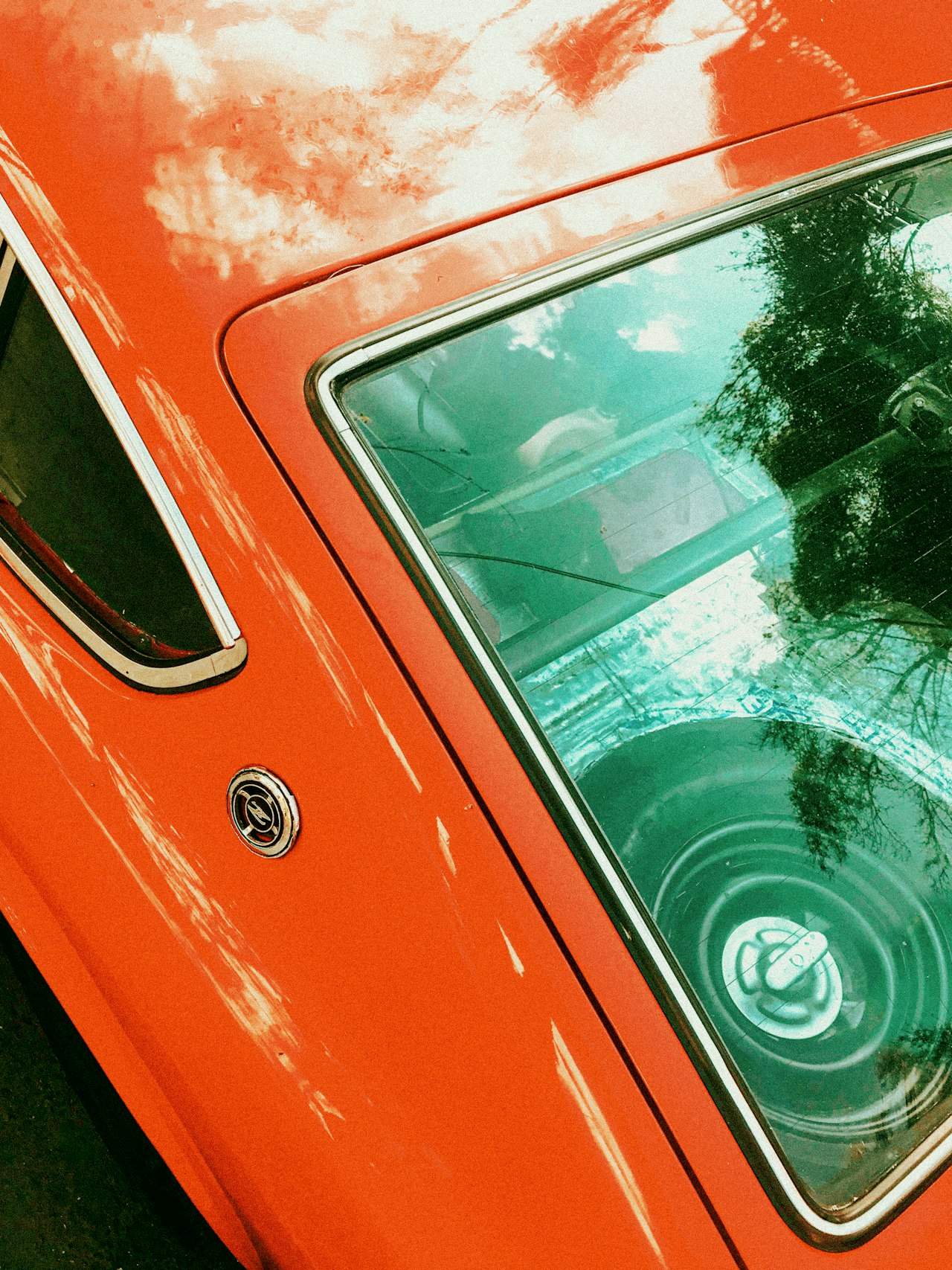
The Datsun "D" logo on the nose and trunk, the Z logo on the tail, and the "240Z" or "260Z" badging script are all available in reproduction — but quality varies. The original die-cast zinc badges with their raised lettering and correct font were specific to Nissan Nissan's OEM suppliers. Cheap reproductions have softer detail, incorrect alloys, and fit the mounting studs poorly. Look for badges that replicate the original weight and casting quality. Motorsport Auto carries the best-quality emblem reproductions.
Overriders and chrome trim
The Z's overriders — the chrome tube bumpers — are among the most recognisable features of the 240Z. Chrome re-plating services for overriders are available, but the underlying steel must be in sound condition. Bent or corroded overriders should not be re-chromed — the base metal will outlast any plating. Source good undamaged originals, have them re-chromed by a specialist using proper copper-nickel-chrome sequence, and fit them correctly using new rubber packing strips.
Tail light lenses
Tail light lenses for the 240Z/260Z are increasingly hard to source in undamaged condition. Scratched, faded, or cracked lenses are common on 50-year-old cars. Reproduction lenses are available but optically inferior to originals — the vintage glass had a specific refraction quality that modern plastics don't quite replicate. If you're building a driver-quality Z, reproduction lenses are fine. For concours, start hunting NOS lenses early.
Window trim and glass channels
The rubber window channels and glass run channels are available as quality reproductions from Z-car specialists. These are often underestimated: poorly fitting channels allow water into the door panels, contributing to the door skin and inner panel rust that makes otherwise sound project cars expensive to restore. Replace all channels on all glass during restoration — it's cheap insurance.
Full Shell Fabrication — The Last Resort That's Becoming Common
The market for complete shell fabrication for Z cars is real and growing. Several fabricators — some in the US, some in Australia, one operating from the UK — have reverse-engineered complete Z shells from original drawings, surviving examples, and careful measurement.
Who is doing it:
- Specialist body shops with Z-car capabilities — particularly in California, Arizona, and the Pacific Northwest — have fabricated replacement shells for concours restorations when the original was beyond repair
- Australian Z-car specialists — the dry-climate Z car supply from Australia has produced some of the best shell fabrication work, with replica shells fabricated to tighter tolerances than original production in some cases
- UK-based fabricators — the UK Z-car community has produced several shell fabrication specialists who work from detailed scans and factory drawings
Cost range
A full replica shell fabricated from scratch typically runs £8,000–£18,000 depending on specification, finish quality, and whether it's a bare shell or includes primer and basic structural assembly. Add shipping if the fabrication is overseas, and add fitting labour if you're not doing it yourself — a full shell fit takes a skilled technician several weeks.
This is not the first option. It is the last resort for cars where the existing shell is so far gone that panel-by-panel repair would cost more than the shell replacement and deliver a worse result structurally. But it exists, and it is a real path for the most distressed Z cars that would otherwise be destined for the crusher.
If you're at the stage of considering a full shell, it is worth getting two or three quotes from fabricators who have done Z cars before. The difference between a fabricated shell built from a scan of an original and one built from guesswork is visible in the door gaps.
Frequently Asked Questions
Where can I find Datsun 240Z body panels?
Do 240Z and 260Z body panels interchange?
Are reproduction Z car floor pans good quality?
Where to buy NOS Datsun Z factory trim?
How much do Datsun 240Z body panels cost?