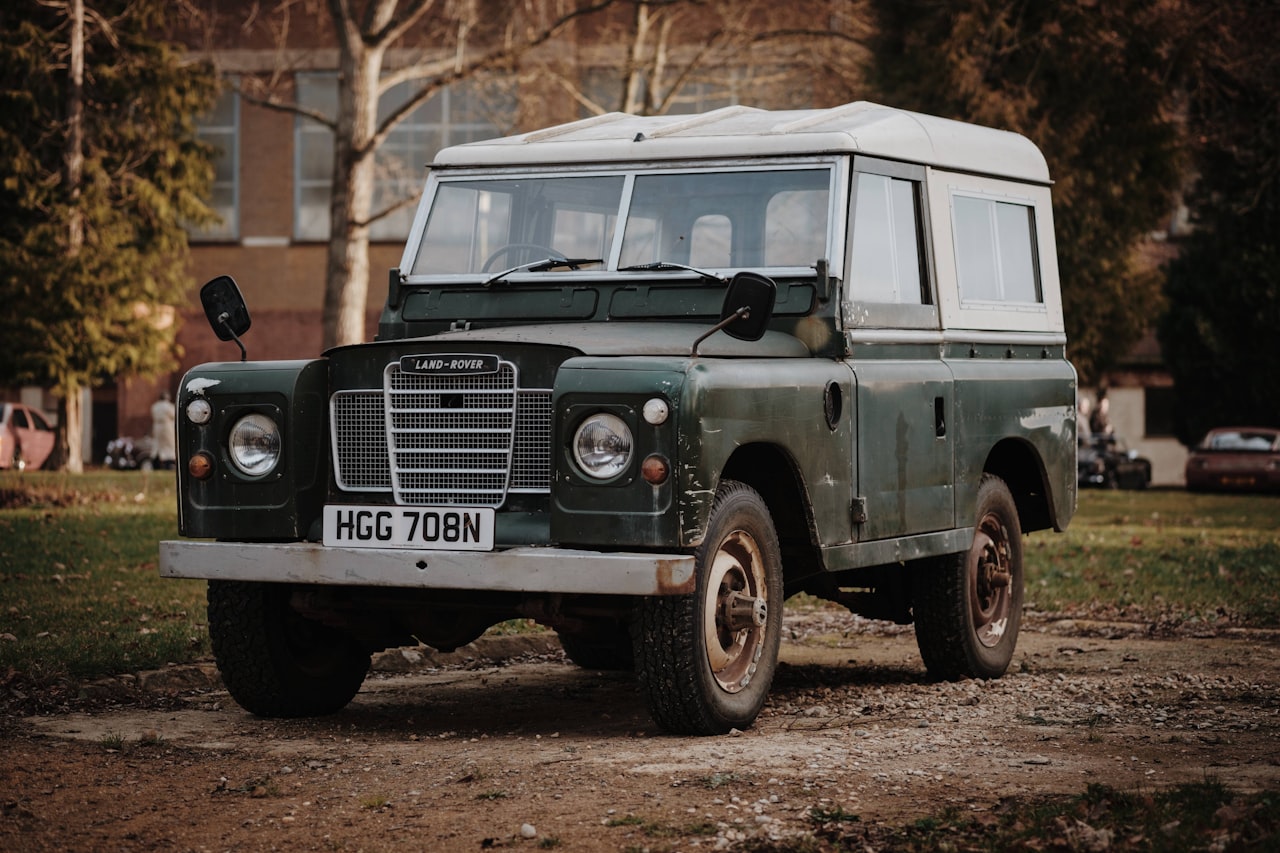
The Land Rover Parts Landscape
Few vehicles have an aftermarket as large or as variable as the Land Rover. From Series I production in 1948 through to the last Defender that rolled out of Solihull in 2016, the sheer volume of vehicles built — and the passionate global community that maintains them — has created a parts ecosystem unlike any other classic in Britain.
The challenge is not finding parts. It is finding the right parts. The Land Rover aftermarket contains genuine OE stock, quality-assured aftermarket equivalents, pattern copies of genuinely questionable standard, and everything in between. Without some knowledge of who makes what and where quality actually lives, it is easy to spend money on components that will fail early or cause damage further down the line.
There is also a fundamental split in the market worth understanding before you start spending: Series (1948–1985) and Defender (1983–2016) are different vehicles with different parts ecosystems. They share some hardware from the overlap years, but the engine families, body structures, and restoration priorities diverge significantly. What holds for sourcing a Series IIA bulkhead does not necessarily hold for a 300Tdi Defender.
The Defender shares significant mechanical architecture with the Discovery Series 1 and 2, and the Range Rover Classic. The 200Tdi, 300Tdi, and Td5 engines all appeared in multiple Land Rover products — meaning Discovery and Range Rover breakers are a legitimate and often cheaper source for Defender engine parts. Always cross-reference part numbers before assuming a Discovery component won't fit.
Chassis & Body — The Critical Parts
The chassis is the backbone decision. Get this right and you have a solid foundation for the next thirty years. Get it wrong and you are back in the same position within a decade. The choice between galvanised and standard steel is the first question any Land Rover restorer should answer before spending money on anything else.
Outriggers are the short horizontal chassis extensions that support the body at the sills and footwells. They rot independently of the main chassis rails and are a common first failure on otherwise sound vehicles. Galvanised outrigger sets are available from Paddocks and Bearmach and are a sensible upgrade even when fitting a standard steel chassis. The cost difference is minor; the maintenance saving is significant.
The bulkhead — the structural firewall panel that forms the front of the cabin — is one of the Land Rover's primary rust victims. Water collects in the footwells, around the pedal box, and inside the heater box channel, which are all integral to the bulkhead structure. A rotten bulkhead affects structural rigidity, door alignment, and windscreen sealing simultaneously. New galvanised bulkheads from respected fabricators such as Marsland are available at £1,500–£2,500 and are the correct answer for a thorough restoration. Pattern steel replacements rust again quickly and are not a long-term solution.
For less severe corrosion, repair panels cover the critical areas: footwell floors, lower bulkhead sections, door pillars. Paddocks and Bearmach both stock repair sections with reasonable fitment. The quality of the repair ultimately depends on the welder doing the work, but good repair panels beat buying a full replacement bulkhead if the surrounding structure is sound.
Door skins, wing tops, and rear crossmembers are all widely available in the aftermarket. Quality varies considerably on door skins — cheap pattern panels have inconsistent pressing depth and don't drain correctly, which accelerates rot in the door cavity. Bearmach's body panels are consistently better than budget alternatives for this reason. For cappings — the aluminium extrusions that cap the top of the door frames on Series models — most are still available new via Paddocks and Craddock's, or as quality used from dismantlers. Windscreen frames on Series (fold-flat) and Defender (fixed) both corrode at the base where they meet the bulkhead top; repair sections are available for both.

Engine & Drivetrain Essentials
The engine fitted to your Land Rover determines which parts ecosystem you are working in. Series engines and Defender engines have very little overlap — and within each family, the specific unit matters considerably for sourcing.
- Complete rebuild kits from Paddocks & Bearmach
- Head gasket, pistons, big-end shells
- Zenith carburettor rebuild kits (petrol)
- Injector nozzles & injection pump seals (diesel)
- 200Tdi: timing belt kit, turbo oil feed pipe, injector seals
- 300Tdi: EGR delete kit, intercooler hoses, head gasket set
- Td5: wiring loom injector harness, injector seals, crank sensor
The 200Tdi (1989–1994) is a particularly strong engine when maintained properly. Its principal vulnerabilities are the timing belt (change it on schedule — there is no warning when it goes) and the oil feed pipe to the turbocharger, which cokes up and starves the turbo of lubrication. Both are cheap insurance. Discovery Series 1 breakers carry 200Tdi engines in large numbers and are a useful source for used assemblies and mechanical take-offs.
The 300Tdi (1994–1998) is arguably the most supported engine in the Defender parts market. The aftermarket for EGR blanking plates, intercooler hoses, rocker cover gaskets, and head gasket sets is enormous. This engine suffers head gasket failures when overheated — keep the cooling system in good order. Turner Engineering supplies quality internal components and timing belt kits for the 300Tdi at a level above the generic aftermarket.
The Td5 (1998–2006) brought electronic fuel management to the Defender and, with it, a different set of failure modes. The injector wiring harness — which runs through the rocker cover — chafes and fails, causing misfires and fault codes. Replacement harness kits are widely available. The Td5 injector seals also weep over time; address them before they contaminate the oil. For anything beyond basic maintenance on the Td5, access to a suitable diagnostic tool (such as Nanocom or iCarsoft LR) is essential.
Gearboxes and transfer cases — the LT77 (early Defender), R380 (later Defender), and LT230 transfer box — all have rebuild kits readily available from Bearmach and Paddocks. The LT230 is particularly well-supported; bearing kits, gasket sets, and oil seal kits are standard stock items. On the axles, the front swivel housing is a known service point on both Series and Defender — swivel seal kits and swivel balls are standard items. The Salisbury rear axle fitted to many Defenders has a well-supported aftermarket for crown wheel and pinion sets, differential bearings, and half-shaft seals.
Where to Source Parts
The Land Rover parts market is large enough to support multiple strong specialists. Here is an honest assessment of each channel.
| Supplier | Speciality | Strengths | Watch Out For |
|---|---|---|---|
|
Paddocks Major UK Specialist |
Full-range Land Rover specialist — Series, Defender, Discovery, Range Rover | One of the largest Land Rover parts operations in the UK. Strong catalogue, decent stock depth, and a team that actually knows the vehicles. Chassis, bulkhead panels, engine, and drivetrain all covered. | Some third-party branded items in the catalogue — check the brand before ordering for structural or safety-critical parts. |
|
Britpart Huge Range · Variable Quality |
Own-brand aftermarket — the biggest catalogue in the Land Rover world | If a part exists for a Land Rover, Britpart almost certainly stock it. Prices are competitive. Useful for low-stress consumables: filters, gaskets, basic hardware, rubber seals. | Quality control is well-documented as inconsistent. Not suitable for structural panels, suspension components, brakes, or steering. The Land Rover community runs countless threads on Britpart failures. Buy here when quality is secondary to price on low-stakes items only. |
|
Bearmach Quality Aftermarket |
Aftermarket parts with better quality assurance than budget alternatives | The generally preferred aftermarket brand among experienced Land Rover restorers. Applies stricter quality standards than Britpart. Good for suspension, body panels, drivetrain components, and engine parts where genuine OE is unavailable or prohibitively expensive. | Prices sit between Britpart and genuine Land Rover. Still not appropriate for brakes and steering — use OE or specialist grade there. |
|
Rimmer Bros UK Specialist |
Series and Defender parts with strong coverage of older models | Long-established British specialist with a well-regarded reputation. Particularly good for Series parts and trim items. Organised catalogue, reliable dispatch, and staff with real knowledge of the vehicles. | Less depth on late Defender (post-2002) than on Series and early Defender. Worth checking Paddocks or Craddock's for Td5-era items. |
|
Demon Tweeks Performance / Uprated |
Uprated suspension, performance brakes, and quality consumables | The destination for upgraded components — uprated dampers, heavy-duty springs, braided brake lines, and quality brake pads. Useful when standard replacements are not sufficient for the vehicle's use case. Good pricing on consumable performance items. | Not the source for standard OE or bodywork items. Performance focus means coverage gaps on basic restoration parts. |
|
eBay Marketplace |
Used, NOS, pattern, and genuine parts — very strong Land Rover market | One of the strongest eBay markets for any classic vehicle. Used engines, gearboxes, bulkheads, axles, and trim all appear regularly. NOS stock surfaces for older Series parts. Patience on eBay genuinely pays. | Condition and quality vary enormously. Always check seller feedback, ask for specific measurements, and confirm part numbers. Returns are rarely smooth. |
|
Turner Engineering Machined Specialist |
Precision machined components — Tdi injection systems, gearbox internals | The specialist for machined and precision-ground components: timing kits, injection pump overhaul parts, gearbox shims, and bespoke machined work. Used extensively by professional Land Rover rebuilders who need correct tolerances rather than approximate aftermarket fit. | Not a general parts supplier — specialist scope only. Lead times on bespoke work can be several weeks. |
|
Craddock's Trusted UK Dealer |
Series, Defender, and military Land Rover parts | A well-regarded independent that stocks genuine Land Rover parts alongside quality aftermarket. Particularly strong on Series and military vehicle components. Knowledgeable staff, honest descriptions, and a catalogue that covers items other suppliers have delisted. | Website navigation can be less slick than larger suppliers. Worth calling if you can't find what you need online — they often have stock not listed on the site. |
OEM vs Pattern Parts — Quality Tiers
The Land Rover pattern parts problem is one of the worst in the classic car world. The volume of vehicles in service has created demand that low-cost manufacturers have flooded with product of extremely variable quality. Understanding the tiers — and knowing where each is appropriate — saves both money and frustration.
Where Land Rover Restorers Used to Look
The Land Rover community has been accumulating sourcing knowledge in forums for the best part of thirty years — and when you get past the inevitable brand debates, that knowledge is genuinely useful. LR4x4 Forum is the largest UK technical forum, with separate sections for Series, Defender, and specific engine types; the failure modes for every variant of every Tdi have been catalogued in excruciating detail by people who fixed them. Defender2.net goes deeper on the Defender specifically, particularly Tdi and Td5 work and Discovery/Range Rover cross-referencing. The Land Rover Series One Club is the authority for Series I questions, with members who've restored these from bare chassis. The Land Rover Owners Club (LROC) covers all models and has useful regional networks for finding local specialists.
The honest picture: the information is excellent. Getting to it means posting a question, waiting, and then reading through fifteen replies that half-answer it before someone who actually knows gives you the part number. That process works — it's just slow.
CarSpanner compresses it. When you describe your Land Rover and the part you need, we cross-reference supplier stock, flag pattern vs genuine quality differences, and tell you the current best source — including the cross-model applications (Defender to Discovery, 200Tdi to 300Tdi) that experienced forum members have confirmed over years. The forum knowledge is baked in. You just don't have to dig for it.