
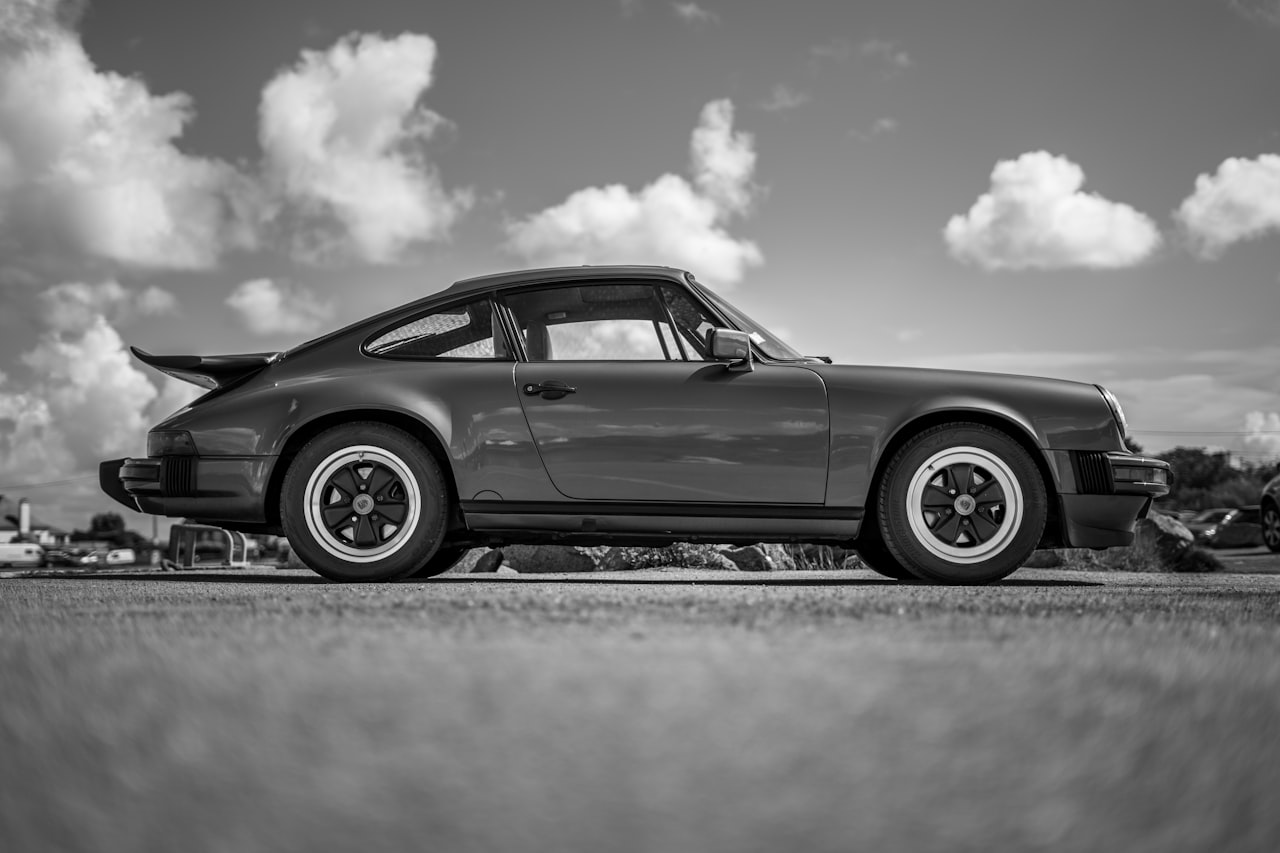
Porsche 911 Marque Deep Dive
For the complete air-cooled 911 history — production generations from the F-series to the 964, body corrosion hotspots by year, mechanical fault diagnosis, and the full supplier directory — see the Porsche 911 Air-Cooled Marque Guide.
Understanding the Model Range
The air-cooled 911 is not a single car. It is a 25-year production run that passed through five distinct chassis generations, four engine families, and three gearbox architectures — while wearing the same silhouette throughout. Getting parts right means knowing precisely which generation you own.
F-Series to G-Series: The Chassis Generations
- F-series (1964–1967) — Original short-wheelbase cars. 2.0-litre flat-six, 901/5-speed gearbox, slim chrome bumpers. Rarest and most valuable. Parts increasingly scarce; early trim especially so.
- A–E series (1968–1973) — Engine displacement grew from 2.0 to 2.2 (1970–71) and then 2.4 litres (1972–73). Wheelbase extended 57mm in 1969, a change that affects all floor pan and rear suspension sourcing. 911S, 911T and 911E variants with different power outputs and spec levels.
- G-series (1974–1977) — 2.7-litre engine (MFI on Carrera, Zenith carbs on base 911T). US-market cars acquired impact-absorbing bumpers under Federal safety law. This is the most commonly confused series for parts — European and US spec differs significantly on front/rear panel work.
- 911SC (1978–1983) — 3.0-litre engine, revised interior, Bosch K-Jetronic fuel injection standardised across the range. Considered by many the most reliable air-cooled unit. Revised door handles, mirrors, and dashboard trim from 1978.
- 3.2 Carrera (1984–1989) — 3.2-litre Bosch Motronic-injected engine, G50 gearbox from 1987, Club Sport option. The last and in many ways the most complete air-cooled 911 before the 964 water-assisted transition.
Always source parts using your car's chassis number (VIN) and the Porsche factory parts microfiche for your exact model year and market. The 911 accumulated detail changes almost annually — a 1975 European 911S and a 1975 US 911S share a body but differ on bumper valance, fenders, trim, and electrical components. Two cars separated by one model year may require entirely different panels.
Engine & Cylinder Components
The air-cooled flat-six is the 911's defining characteristic — and its most demanding restoration challenge. Unlike water-cooled engines where bore wear is solved by sleeving or reboring, the 911's aluminium cylinders require a different approach depending on the engine family.
Nikasil vs Alusil: The Barrel Question
Early 911 engines (2.0, 2.2, 2.4 litre) used Biral cylinders — cast iron liners inserted into aluminium barrels. These can be rebored conventionally and replacement barrels are available from specialists. The transition to Nikasil-coated bores (silicon carbide electrodeposited onto aluminium) occurred progressively across the 2.7 and SC/Carrera generations.
Nikasil barrels cannot be conventionally rebored. When worn or scored, the options are: replace with new barrels, re-Nikasil (have the coating stripped and reapplied by a specialist), or fit purpose-made replacement Alusil (hypereutectic aluminium-silicon alloy) barrels. For SC and 3.2 Carrera engines, quality replacement barrel and piston sets from Stoddard Porsche or Pelican Parts are the standard solution — a complete set of six runs £800–£2,000 depending on specification.
Common Engine Parts Needs
- Cylinder barrel and piston sets — The most common engine rebuild item. Available from Stoddard and Pelican for all generations. Match to your engine number for correct compression ratio.
- Chain tensioners and guides — The 911 engine uses a complex chain-driven camshaft system. Worn tensioners cause characteristic rattle on cold start. Budget £200–£450 for a complete tensioner service with quality parts.
- Valve guides and seats — A full engine rebuild will typically require all twelve valve guides. Available as OEM-spec items from Heritage Parts Centre and Stoddard.
- Air-cooled engine seals and gaskets — Full gasket kits for 2.7, SC, and 3.2 engines are catalogued by Pelican Parts and Design 911. Do not use low-quality pattern gasket kits on a performance engine — the consequences are expensive.
- Fuel injection components (K-Jetronic / Motronic) — Injectors, fuel distributors, and warm-up regulators for SC and Carrera are available reconditioned. Sierra Madre Collection holds deep stock of injection system components.
Sourcing barrels, pistons, or top-end components for a specific 911 year and engine displacement? Tell Geoff your VIN and he'll confirm correct fitment spec.
Ask Geoff →Transmission: 901, 915, and G50
Three gearbox families cover the air-cooled production run, and they are not interchangeable without significant modification. Knowing which unit you have — and what it shares with what — is essential before ordering any gearbox parts.
901 (1964–1971)
The original 911 five-speed transaxle. Compact, light, characterful — and fragile by modern standards. Synchromesh on first gear was optional on early cars, not standard. Common failure points are the third/fourth synchromesh cones and the shift forks. Rebuild kits are available from Stoddard and Heritage Parts Centre, but full rebuilds are specialist work. Expect to pay £1,500–£3,000 for a properly rebuilt 901.
915 (1972–1986)
Stronger and more refined than the 901, the 915 was introduced with the 2.4-litre cars and ran through the 911SC and into the early 3.2 Carrera. It has a distinctive reverse gear location (left and back, not a gate pattern) that catches owners unfamiliar with it. The 915 responds well to rebuild; parts availability is excellent. Common wear items: the selector shaft O-ring (an inexpensive fix if caught early — a disaster if ignored), and the pinion bearing. Rebuilt 915s are available exchange from several specialists at £1,500–£3,500 depending on ratio specification.
G50 (1987–1989)
Introduced on the 3.2 Carrera from model year 1987, the G50 brought a conventional reverse gate and hydraulic clutch — a significant improvement in daily usability. This is the most robust of the three and the one most often sought for retrofits. Exchange rebuilt G50s are available from Design 911 and Stoddard at £2,000–£4,000.
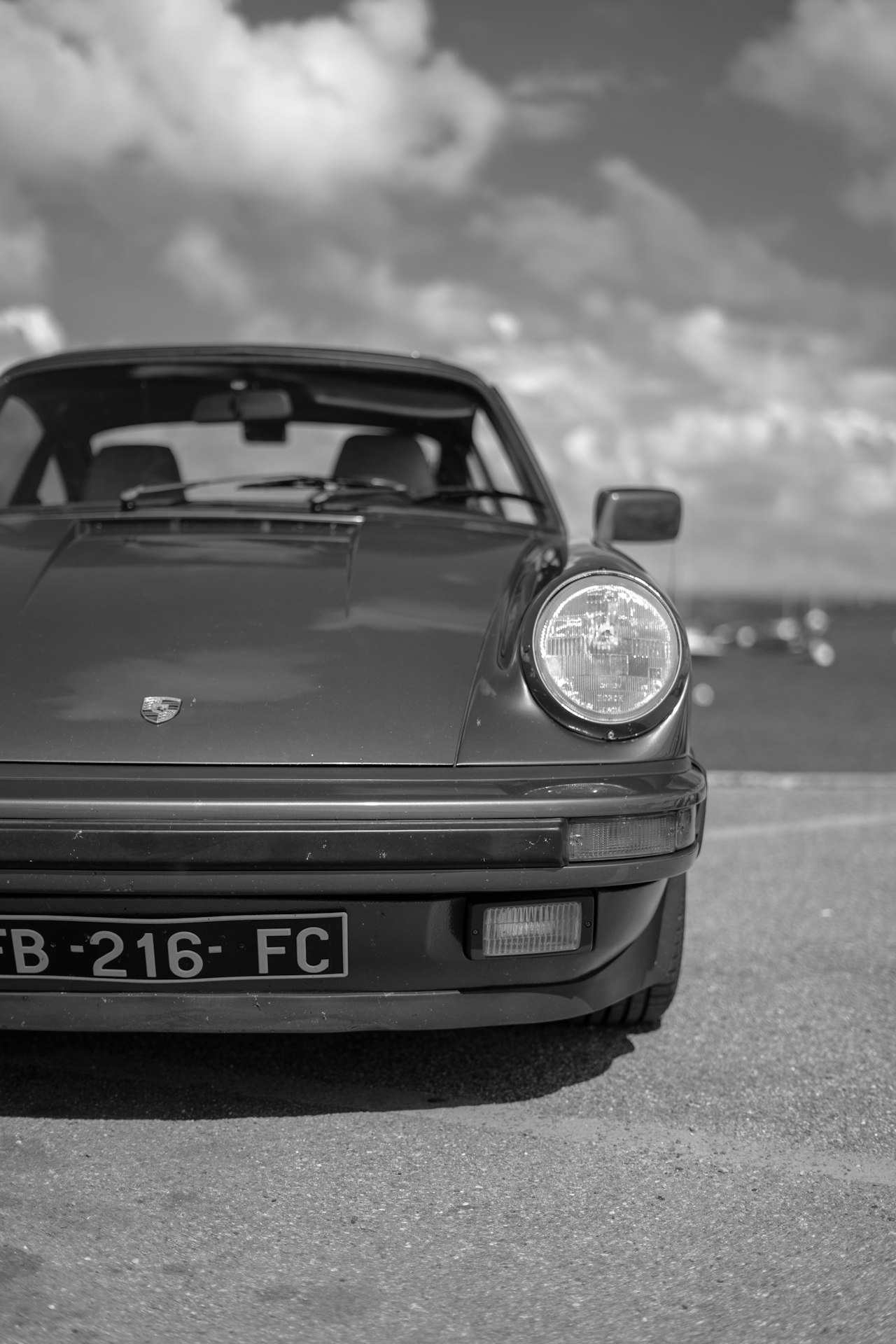
Not sure whether you have a 901, 915, or G50 gearbox, or what parts that means you need? Geoff can identify from your year and model.
Ask Geoff →Body Panels & Rust-Prone Areas
The 911's bodyshell is galvanised from 1976 onwards — a significant improvement that makes G-series and later cars far more corrosion-resistant than their predecessors. Pre-galv cars require vigilance in specific structural areas, and even the later cars are not immune where drainage is compromised.
The Kidney Areas
The most notorious rust trap on any air-cooled 911. The kidney area refers to the curved bodywork panels immediately behind the rear wheels, just forward of the engine compartment lid. Water, mud, and debris pack into the cavity between the rear wing and the bodyshell. On un-galvanised cars, corrosion often eats through the inner and outer panel simultaneously. Reproduction kidney panels are available from Design 911 and Heritage Parts Centre; quality varies — insist on heavy-gauge steel and check panel fit carefully before welding in.
Front Wings (Fenders)
Early 911 front wings suffer stone chip corrosion along the lower trailing edge and at the A-pillar junction. Reproduction front wings are catalogued by all major suppliers, but fit quality differs. The best reproduction panels for early cars (pre-1974) come from Design 911 and Heritage Parts Centre. Post-1974 wings are simpler to source due to higher production volume. US-market cars with impact bumper systems (1974–1977) require market-specific front valances that differ from European spec — do not order European panels for a US car.
Battery Box
The battery lives in the front luggage compartment, and acid leakage combined with trapped moisture has rotted the battery box on the majority of surviving unrestored cars. The battery box floor and surrounds are available as repair panels from most 911 specialists. This is a structural area on early cars — ensure correct panel thickness and weld quality. A properly repaired battery box with a quality reproduction panel and correct primer costs £150–£400 in materials.
Sill Sections and Floor Pans
The 1969 wheelbase extension changed floor pan dimensions — sourcing floor pans requires knowing whether your car is short-wheelbase (1964–68) or long-wheelbase (1969+). Full floor pan sets are available for long-wheelbase cars from Design 911 and Heritage Parts Centre. Short-wheelbase floor pans are rarer and may require specialist fabrication. Sill repair sections are available for both.
Interior Trim: Seats, Door Cards & Instruments
911 interior trim has a devoted restoration following, and quality varies dramatically by what you source and from where. Original trim in correct colourways commands significant premiums; reproduction quality ranges from exceptional to poor.
Seats
Original comfort seats and sport seats from early 911s are highly sought. Period-correct Recaro and Scheel aftermarket seats, factory-fitted on many Carrera and RS variants, are collected items in their own right. For seat restoration, specialists offer correct leather and leatherette hides in original colourways. Sierra Madre Collection is the deepest source for original and restored seating.
For budget restorations, quality reproduction seat covers from TMI Products or Autos International provide correct appearance at a fraction of original leather cost — a legitimate choice for non-concours cars.
Door Cards
Door cards changed significantly across the production run. Early cars used simple leatherette cards with minimal trim hardware. The SC introduced a revised card with modified armrest and door pull. The 3.2 Carrera used yet another revision. Always specify model year and LHD/RHD when ordering — UK-market RHD cars differ from LHD export cars on driver's side door card detail. Reproduction door cards are available from Design 911 and Heritage Parts Centre; original used cards in good condition are found through specialist dealers and auctions.
Instruments
The 911's instrument cluster — with its distinctive central rev counter flanked by ancillary gauges — is a key element of the car's identity. Instrument restoration is a niche speciality; suppliers like North Hollywood Speedometer (US) and a handful of UK specialists rebuild VDO gauges to correct specification. Replacement instruments for SC and Carrera are available from Pelican Parts and Design 911. For very early cars, sourcing correct instruments often means the second-hand market and dedicated auction houses.
Suspension & Brakes
The 911's torsion bar suspension — MacPherson struts at the front, trailing arms at the rear — is fundamentally simple and extraordinarily well supported in the aftermarket.
Suspension Consumables
- Torsion bars — Available in standard and uprated specification from Stoddard, Pelican, and Heritage Parts Centre. Early and late torsion bars differ in diameter and spline count — match to your car's production date.
- Tie rods and ball joints — Standard OEM-quality replacements are readily available. Use quality brand (TRW, Lemforder) parts for steering components — pattern quality on these items is poor.
- Front strut housings — The aluminium strut housings corrode at the lower pinch bolt area. Reconditioned housings are available from specialist rebuilders; new reproduction units come from Design 911.
- Rubber bushings — Polyurethane bush kits (Elephant Racing, Porsche Club suppliers) are the standard upgrade for worn rubber; correct for road use without excessive harshness.
Brakes
All air-cooled 911s used ATE four-pot callipers (front and rear on performance variants; single-pot rear pistons on budget spec early cars). ATE callipers are fully supported in the aftermarket with seal kits, pistons, and rebuilt exchange units. Brake discs (rotors) are available from all main suppliers including Pelican Parts and Heritage Parts Centre. Do not fit pattern brake callipers on a 911 — the hydraulics and pedal feel are sensitive to calliper quality. Use ATE, Brembo, or Porsche-branded hardware only. See also our OEM vs NOS vs Reproduction guide for how to evaluate part quality across categories, and our Safety Components guide for why pattern brake parts are never an acceptable choice on any classic car.
Where to Buy: Key Suppliers
The 911 is one of the best-supported classic cars in the world. The suppliers below cover the breadth of what you'll need — from consumables to hard-to-find trim.
| Supplier | Best For | Stock Depth | Market |
|---|---|---|---|
| Stoddard Porsche | Engine rebuild parts, drivetrain, mechanical consumables; deep NOS stock for early cars | ★★★★★ | US (ships worldwide) |
| Pelican Parts | Broad catalogue across all air-cooled years; good pricing on consumables; strong DIY resource library | ★★★★☆ | US (ships worldwide) |
| Sierra Madre Collection | Rare and discontinued parts; interior trim; early F-series and RS parts; concours-grade sourcing | ★★★★★ | US (specialist) |
| Design 911 | UK-based; body panels, interior, mechanical; strong on SC and 3.2 Carrera parts; fast EU/UK shipping | ★★★★☆ | UK/Europe |
| Heritage Parts Centre | UK specialist; genuine OEM, NOS and quality reproduction; good on gearbox and engine components | ★★★★☆ | UK/Europe |
| Maxpeedingrods | Budget suspension components (coilovers, adjustable arms); useful for track/modified builds — not for standard restoration | ★★★☆☆ | Global |
| eBay | NOS trim, used mechanical parts, hard-to-catalogue items; invaluable for rare early car pieces — quality verification essential | ★★★★☆ | Global marketplace |
| Porsche Club / Registry Forums | Private sales of used, NOS, and restored parts from knowledgeable owners; often the only route for very rare trim | ★★★☆☆ | Global (community) |
Need something specific that Pelican and 911 UK don't list? There's a deeper network — tell Geoff what you're after.
Ask Geoff →Common Questions
Porsche 911 Marque Deep Dive
For the complete air-cooled 911 history — model generations from the original 901 to the 964, corrosion hotspots by generation, parts challenges across engine, gearbox, and body, and a full supplier comparison — see the Porsche 911 Air-Cooled Marque Guide.