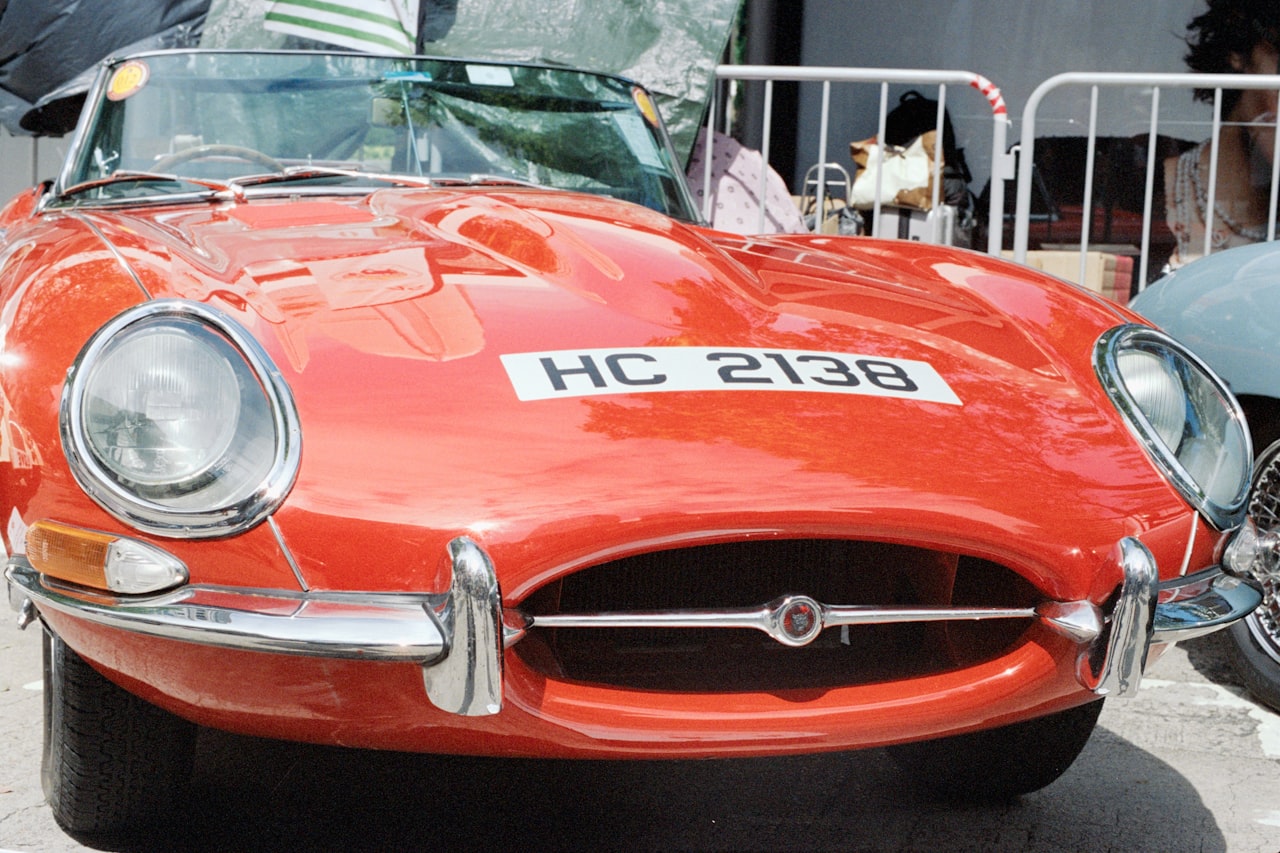
The Car
“The most beautiful car ever made.”
Enzo Ferrari, on first seeing the E-Type at Geneva, 1961The Jaguar E-Type debuted at the Geneva Motor Show in March 1961, and the motoring world has not entirely recovered. Enzo Ferrari — not a man given to praising the competition — is widely credited with calling it the most beautiful car ever made. He was not wrong.
The E-Type was designed by Malcolm Sayer, an aerodynamicist who applied aircraft design principles to car bodies. The result was a shape that looked fast standing still and proved it on the road: the 3.8-litre twin-cam straight-six XK engine, fed by triple SU carburettors, produced 265 bhp and propelled the car to 150 mph — a figure that made it one of the fastest production cars in the world in 1961, at a fraction of the price of anything that could match it.
The E-Type was produced from 1961 to 1975 across three distinct series, in three body styles: the OTS (Open Two-Seater) roadster, the FHC (Fixed-Head Coupe), and from 1966 the 2+2. Each series brought changes that affect parts sourcing today — sometimes dramatically.
Can’t identify the part you need? Describe it in plain English, upload a photo, or paste a part number. CarSpanner identifies E-Type components from Lucas electrical part numbers, Series identification details, and physical characteristics — and cross-references against the specialist suppliers most likely to stock it. Find an E-Type Part →

Not sure which E-Type variant you have? Describe your chassis number, series, or any distinguishing features — and get an instant identification and parts sourcing recommendation.
Find E-Type parts →Series Guide
Understanding which series you have — and where your car falls within that series — is the first step to finding the right parts. The changes between series are not cosmetic tweaks. They are substantive engineering and regulatory differences that determine which components fit your car.
The original and most sought-after. Triple SU carburettors on the 3.8-litre engine, covered headlights behind glass fairings, and the clean, unadorned bodywork Malcolm Sayer intended. The earliest “flat-floor” cars (before the footwell was recessed for more legroom) are the most collectible E-Types of all. The engine changed from 3.8 to 4.2 litres in October 1964, bringing a better gearbox and improved torque.
Not an official designation — collector shorthand for the transitional cars built between the Series 1 and Series 2. These cars have open headlights (to comply with US regulations) combined with Series 1 mechanical components and interior features. A Series 1½ presents unique parts-sourcing challenges because it draws from both series. Confirm your exact chassis number with a specialist before ordering.
The car the US federal safety and emissions regulations shaped. Open headlights, larger bumpers and overriders, a different dashboard, relocated switches, and revised engine breathing to meet emissions requirements. Twin Stromberg carburettors replaced the triple SUs on many-market cars. The compromises were functional, not aesthetic — but they changed the parts specification significantly from Series 1.
A different car mechanically. The 5.3-litre V12 engine replaced the straight-six, the bodywork was wider to accommodate it, the flared wheel arches changed the silhouette, and the front subframe was redesigned. The Series 3 was only produced as an OTS roadster or 2+2 — the fixed-head coupe was dropped. Parts interchange with earlier series is limited to interior trim and some suspension components.
Parts Landscape
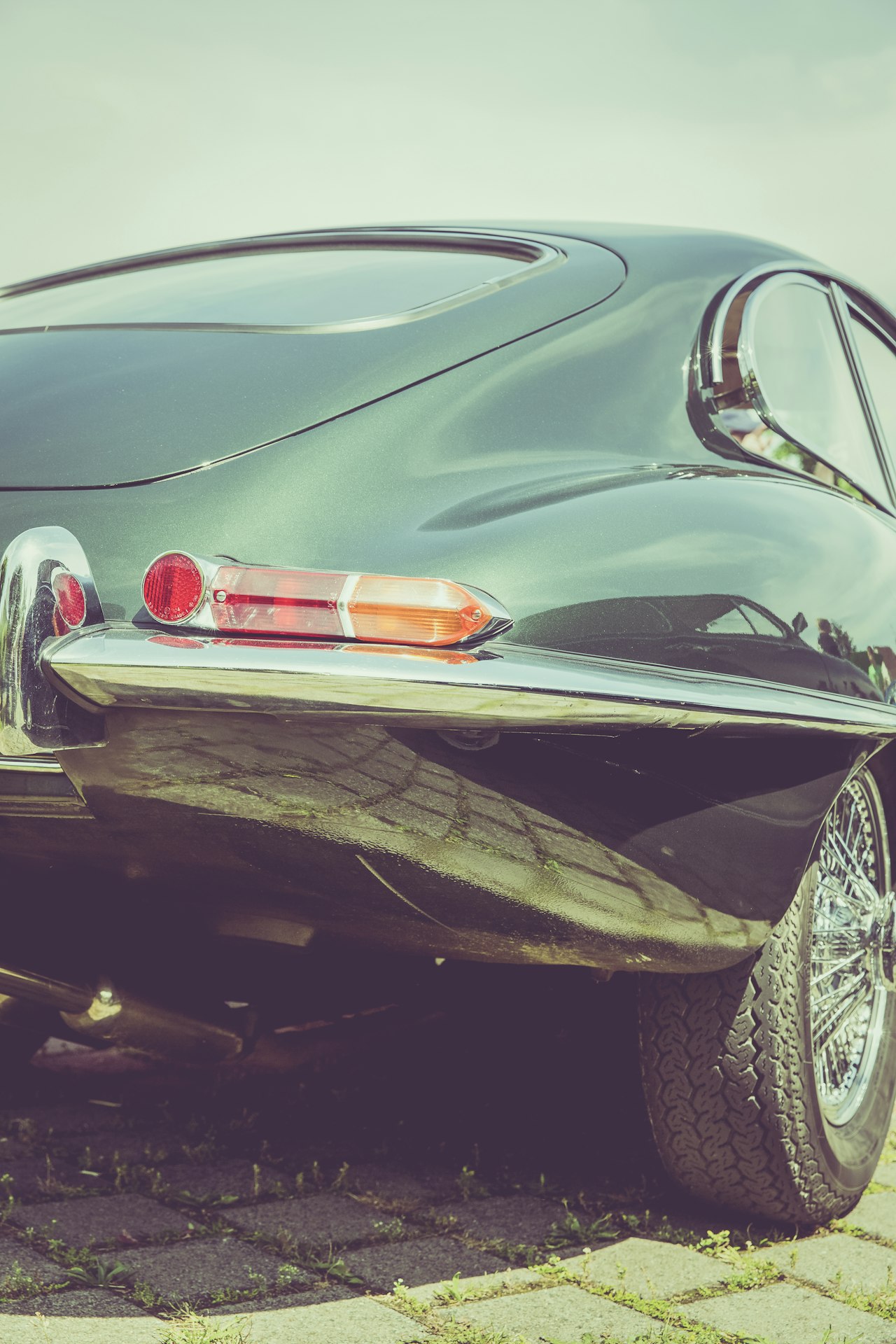
The E-Type benefits from one of the best-supported parts supply chains in the classic car world. SNG Barratt alone catalogues over 14,000 E-Type-specific parts. Between the major specialists, virtually every component on the car is available as new manufacture, quality reproduction, or reconditioned. The challenge is not availability — it is knowing what to buy and from whom.
Body Panels
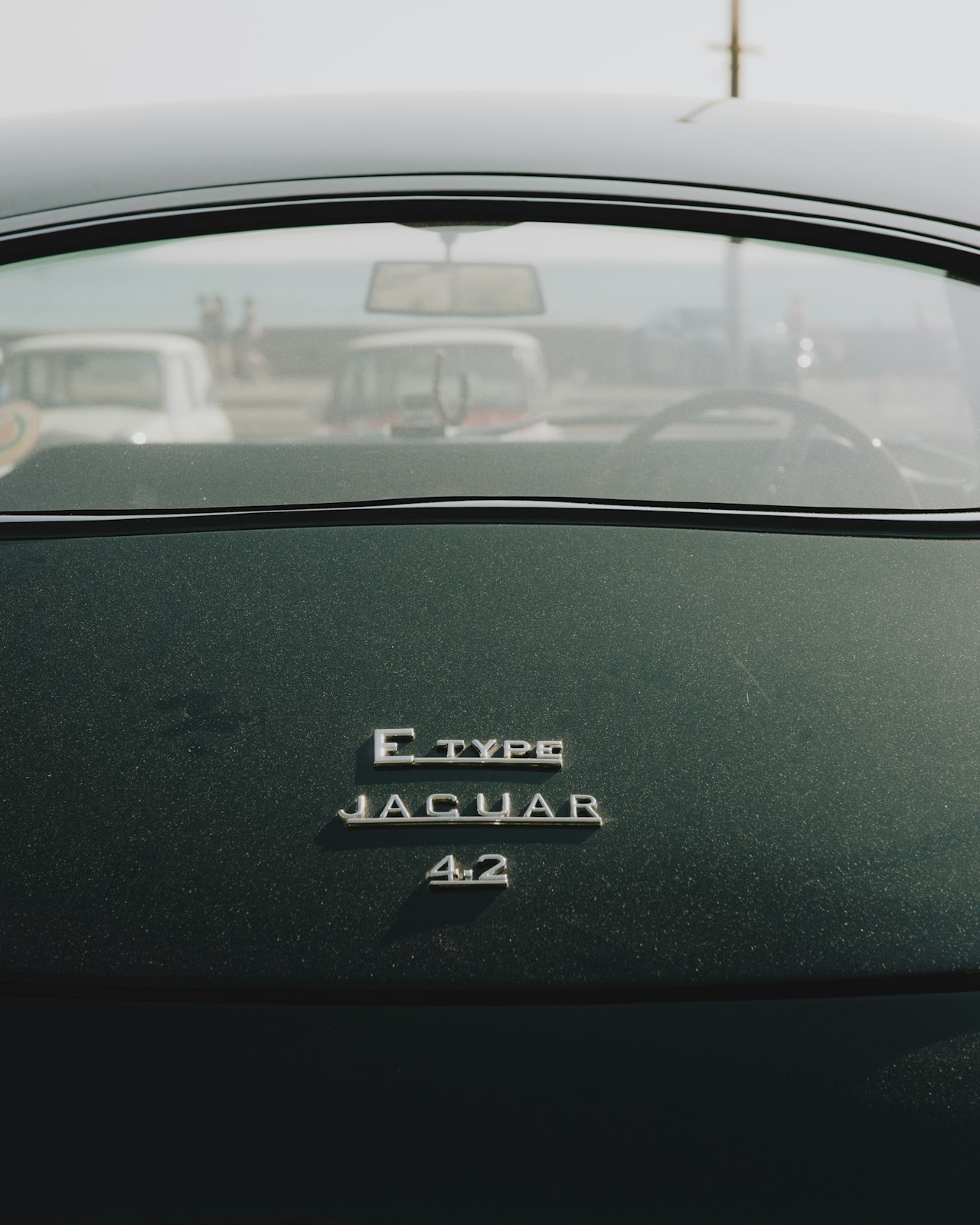
SNG Barratt is the reference standard for E-Type body panels. Their panels are manufactured to original Jaguar specifications, with correct gauge steel, accurate pressing, and proper fit. They are the supplier against which other E-Type panels are measured.
XKs Unlimited, based in San Luis Obispo, California, is the primary US-based source for body panels and carries a comprehensive range of repair sections alongside complete panels.
The critical areas on any E-Type body are the sills, floors, and rear tub. Corrosion in these areas is structural, not cosmetic — the E-Type is a monocoque, so the body is the chassis. Sill and floor corrosion is near-universal on E-Types that have not been fully restored, and repair costs escalate once the rust reaches the spring hanger mounts and rear suspension pickup points. Budget for metalwork before you budget for paint.
The XK Engine
The XK straight-six — in 3.8-litre and 4.2-litre forms — is one of the great engines in automotive history. Designed by William Heynes and Claude Baily, the twin-cam inline-six powered Jaguar cars from 1948 to 1992 and Le Mans winners in between.
For E-Type owners, the XK engine is well served by specialists. The 3.8-litre engine runs triple SU carburettors (HD8 on early cars), while the 4.2 also uses triple SUs but with different needles and jets. Rebuild support is comprehensive: pistons, liners, bearings, camshafts, timing chains, and gasket sets are all available from SNG Barratt, XKs Unlimited, and specialist engine rebuilders. AJ6 Engineering and Forward Engineering are respected names for head work and performance upgrades.
Rimmer Bros stocks a wide range of ancillary components — gaskets, hoses, fasteners, and trim clips — that complement the major specialists' engine catalogues.
If you are rebuilding an XK engine, invest in the Jaguar factory workshop manual for your specific engine variant. The torque settings, bearing clearances, and assembly procedures are well documented and differ between 3.8 and 4.2 engines. A good engine manual costs less than one incorrectly assembled component.
Electrical Systems
Lucas electrics have a reputation. Much of that reputation is earned by age and neglect rather than original design — a 60-year-old electrical system of any make will be unreliable if it has not been maintained. The solution is straightforward: rewire it.
SNG Barratt supplies complete wiring looms (harnesses) to original specification for all E-Type series. These are made with correct wire gauge, colour coding, and connector types. British Wiring is an alternative source for harnesses and is particularly strong on the US market. For US buyers, Moss Motors carries replacement electrical and trim components alongside its British-marque catalogue.
For switches, instruments, and ancillary electrical components, SNG Barratt and XKs Unlimited carry the full range. Lucas components are still manufactured in many cases — the brand survives and supplies replacement parts for many of its historic products. For a complete electrical restoration, replacing the loom alongside switches, relays, and earthing points eliminates the two most common causes of Lucas unreliability: degraded insulation and poor earth connections. To identify which switches are original and which are replacements — particularly useful on Series 1 cars where incorrect switch types can affect both value and correctness — see How to Identify Original Dashboard Switches on a Jaguar E-Type Series 1.
For guidance on why quality matters for safety-critical components — including electrical systems that control brake lights and indicators — see our safety components guide. For understanding the difference between OEM, NOS, and reproduction parts, see our dedicated guide. For a complete guide to sourcing NOS for E-Type, see our NOS Parts — The Complete Guide.
Supplier Directory
The following suppliers specialise in Jaguar E-Type parts. This is not an exhaustive list, but these are the names that appear consistently in the E-Type community as reliable sources for quality parts.
| Supplier | Speciality | Best For |
|---|---|---|
| SNG Barratt | Comprehensive Jaguar parts catalogue (14,000+ E-Type parts). Body panels, mechanical, trim, electrical. Ships worldwide from Coventry, UK. | First stop for any E-Type part. Reference-standard body panels. Complete wiring looms. Chassis-number-indexed online catalogue. |
| XKs Unlimited | Full-range Jaguar parts supplier based in San Luis Obispo, California. Mechanical, body, trim, electrical, performance. | US-based buyers who want domestic shipping. Comprehensive stock and knowledgeable counter staff. |
| Classic Jaguar | Parts supply and restoration services, Austin, Texas. Specialises in E-Type and XK models. | Hard-to-find items. Combined parts and restoration expertise — they know what fits because they fit it daily. |
| Welsh Enterprises | New, used, and reconditioned Jaguar parts. Steubenville, Ohio. Strong on mechanical and trim components. | Reconditioned original parts. Good source for used components when NOS is unavailable or uneconomical. |
| British Wiring | Wiring harnesses and electrical components for British classics. Handmade to original specification. | Complete rewiring projects. US-made harnesses with correct colour coding, cloth braid available for concours work. |
| Hemmings / eBay | Marketplace listings for NOS, used, and rare parts. Hemmings classifieds; eBay Motors global auction. | NOS parts hunting. Rare or discontinued items. Always verify seller reputation and part authenticity before purchasing. |
| Jaguar Daimler Heritage Trust | Official heritage body. Maintains original build records for Jaguar vehicles including E-Types. | Heritage Certificates confirming original specification, build date, colour, and engine number. Essential for verifying correct spec on any E-Type. |
For any E-Type part you are unsure about, ask CarSpanner. Describe the part, tell us your chassis number or series, and we will point you to the right supplier and the right specification.
For a comprehensive deep-dive into E-Type parts sourcing — confirmed NLA parts, rust hotspots, the full 8-supplier table, and OEM vs reproduction guidance — see the Jaguar E-Type Restoration Guide →
The companion deep-dive on Series 1/2/3 sill repair sections, rear tub, body shells / donor panels, weatherstripping kits, and chrome trim — SNG Barratt, Moss, Rimmer, XKs Unlimited sourcing per category — is at Jaguar E-Type Hardest-to-Find Panel Fit & Seals Parts →
For any E-Type part you are unsure about — describe the part, tell us your chassis number or series, and we will point you to the right supplier and the right specification.
Ask about your E-Type →Common Challenges
Every E-Type restoration encounters the same three challenges. Knowing about them before you start saves time, money, and frustration.
Bonnet Cost and Complexity
The E-Type bonnet is a single forward-tilting assembly that includes the wings, bonnet top, and inner structure. It is large, complex, and expensive to repair or replace. A new bonnet assembly from SNG Barratt is a significant investment. Repairing a damaged original bonnet requires a specialist panel beater with E-Type experience — the compound curves and thin gauge steel are not forgiving. Before buying an E-Type, inspect the bonnet carefully for accident damage, filler, and alignment issues. A straight, undamaged bonnet is worth a premium on the purchase price.
Rear Tub Rust
The rear tub is the structural monocoque behind the cabin. It carries the rear suspension, the fuel tank, and the boot floor. Water ingress through failed seals, blocked drain holes, and condensation corrodes it from the inside out. By the time rust is visible externally, the internal structure may be severely compromised. Rear tub repair is body-off work — the most expensive category of E-Type structural restoration. Probe thoroughly before purchase, and budget generously for metalwork if the car has not been previously restored.
IRS Subframe
The independent rear suspension (IRS) subframe is an engineering highlight of the E-Type but a maintenance challenge. The subframe carries the differential, inboard rear brakes (on Series 1 and 2), half-shafts, and lower wishbones. The entire assembly must be removed for many operations — including rear brake service on cars with inboard brakes. Metalastics (rubber-bonded mounting bushes) deteriorate with age and are a common source of rear-end noise and handling imprecision. Budget for a full IRS overhaul — bearings, seals, bushes, and brake components — as part of any E-Type recommissioning. Quality parts from a specialist supplier are essential here; the IRS is safety-critical.